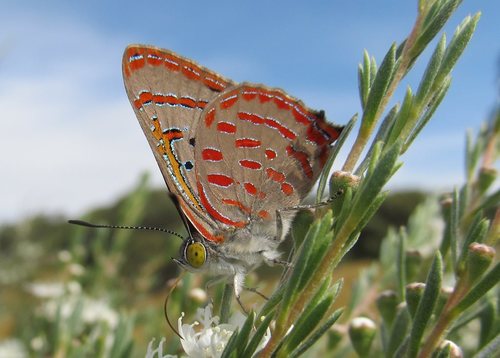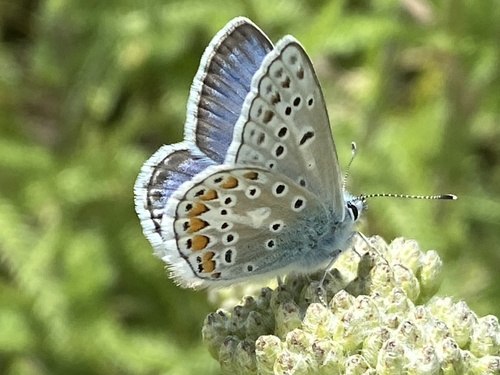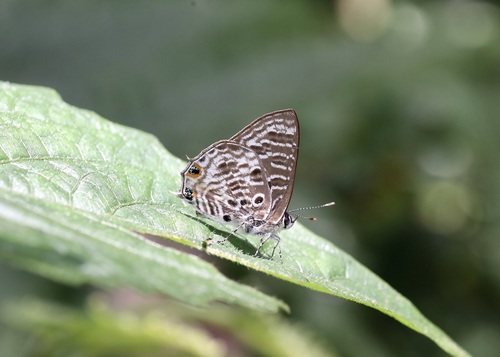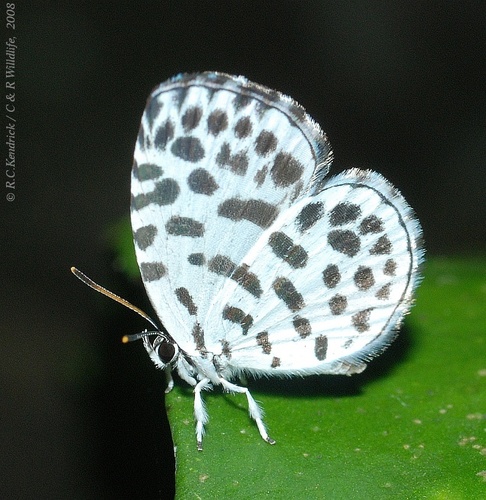
About Anthene lycaenina (Felder, 1868)
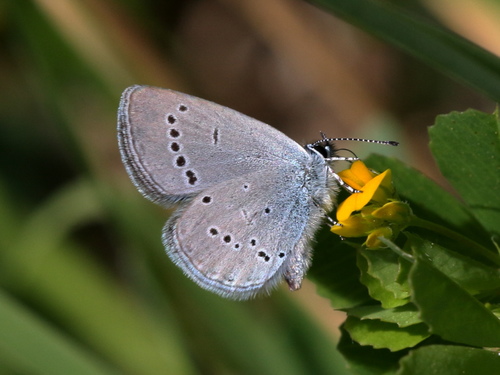
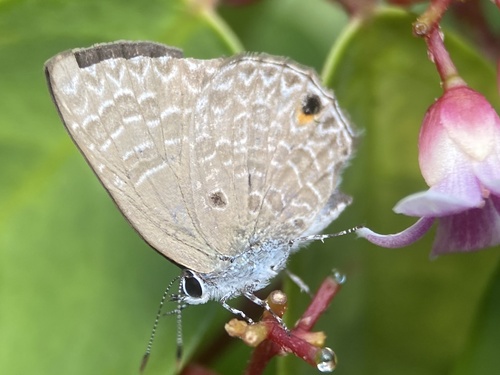
Anthene lycaenina closely resembles Anthene emolus. For both sexes of Anthene lycaenina, but especially for males, the forewing is distinctly narrower with a more acute apex, and the hindwing has a more acutely angled tornus. The upperside markings of Anthene lycaenina are very similar to those of Anthene emolus, but the two species differ on the underside as follows. The ground colour of Anthene lycaenina is similar to that of Anthene emolus, but one shade darker. On the forewing of Anthene lycaenina, the transverse discal band is dislocated below vein 3 and shifted inwards. This arrangement forms a rough Y-shaped figure, where the short band on the discocellulars and the anterior portion of the discal band make up the two branches, and the lower portion of the discal band forms the stem. On the hindwing of Anthene lycaenina, a large black or dark brown spot encircled by white touches vein 7 near its base, which is a spot that never appears in Anthene emolus. The discal and terminal transverse bands on the hindwing, along with their pale or white edgings, are much more broken, irregular, and confused than in Anthene emolus. Antennae, head, thorax, and abdomen match the features seen in female Anthene emolus. However, on the underside, the palpi, thorax, and abdomen are whiter with a slight bluish tint.