About Antennaria dioica (L.) Gaertn.
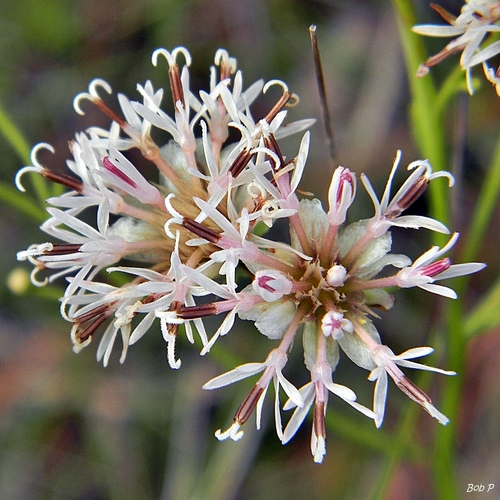
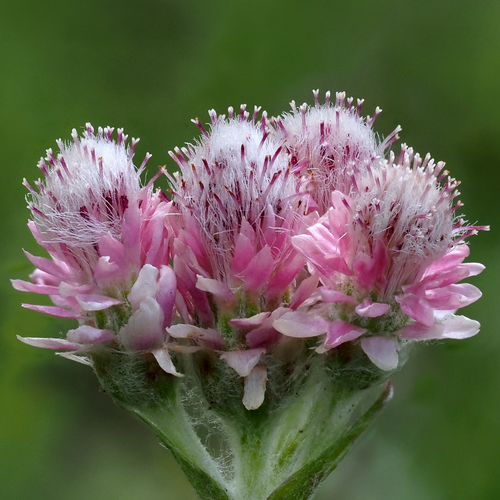
Antennaria dioica (L.) Gaertn. is an evergreen herbaceous perennial that grows 10–20 cm tall. It forms a rosette of basal spoon-shaped leaves, reaching 4 cm long and 1 cm wide at their broadest point near the leaf apex; smaller leaves are arranged spirally along its flowering stems. Its flowers form in capitula (flowerheads) 6–12 mm in diameter, with pale pink ray florets and darker pink disc florets. The plant’s common name comes from its flower clusters, which are said to resemble the pads or toes of a cat’s paw. This species is dioecious, but can also reproduce asexually without fertilization. Colonies can be entirely female, entirely male, or a mix of both sexes; male plants have whiter flower heads than female plants. Its species epithet dioica comes from Greek, referencing the species’ separate male and female individual plants. Its common habitats are mountain grasslands, dry pastures, and woodland edges. While not widely used in modern herbal medicine, the plant was historically credited with antitussive, astringent, diuretic, and emollient properties. It was traditionally used to treat bronchitis, liver and gall bladder complaints, hepatitis, and diarrhea. Externally, it has been used as a gargle for tonsillitis and as a douche for vaginitis. In his 1597 Herball, John Gerard described the plant as follows: "When the flower hath long flourished and is waxen old, then comes there in the middest of the floure a certain brown yellow thrumme, such as is in the middest of the daisie, which floure being gathered when it is young may be kept in such manner (I meane in such freshness and well-liking) by the space of a whole year after in your chest or elsewhere, wherefore our English women have called it 'Live Long,' or 'Live-for ever,' which name doth aptly answer this effects."