About Anorthoa munda (Denis & Schiffermüller), 1775
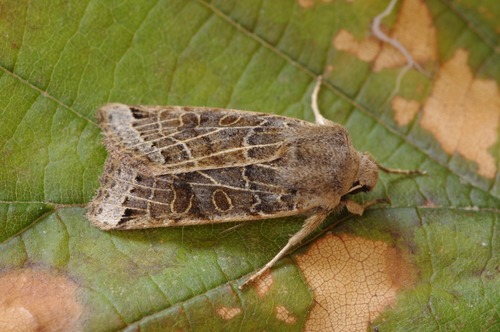
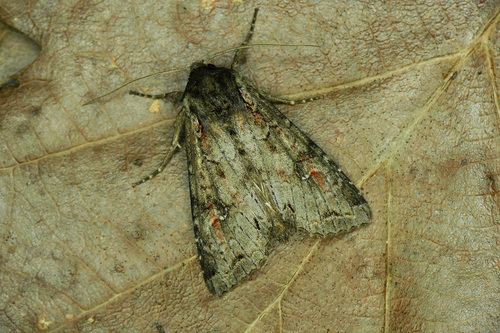
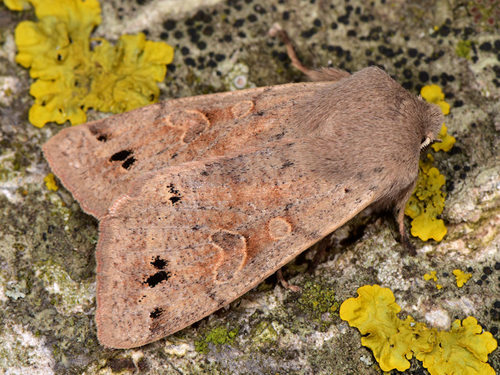
Anorthoa munda (Denis & Schiffermüller), 1775, is also known as Perigrapha munda, and is commonly called the twin-spotted Quaker. It is a moth species belonging to the family Noctuidae. Its wings are gray: the forewings have two very conspicuous dark spots that lie very close together on their disc, plus a small dark apical mark on the costal edge. The fuscous hindwings have a discal spot. This species has a wingspan of 38–44 mm. It is distributed across the Palearctic realm, including most of Europe (it is only absent from northern and southern Europe), Russia, and Asia extending as far east as Japan. Depending on the location, the moth flies from March to May. Its larvae feed on oak, willow, Populus tremula, Fraxinus excelsior, Acer campestre, Humulus lupulus, and honeysuckle. Adult moths, which feed on nectar, visit sallow blossom. It inhabits wooded areas including deciduous forests, bushy hedgerows, gardens, and parkland. In the Alps, it can be found up to a maximum elevation of 1200 meters.