About Anoplognathus pallidicollis Blanchard, 1851
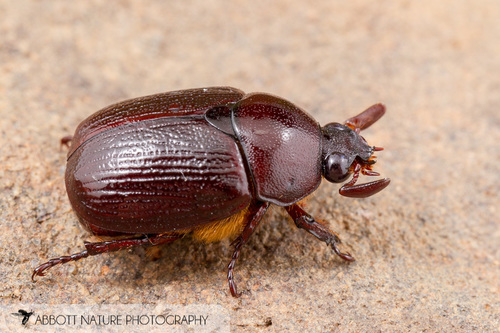
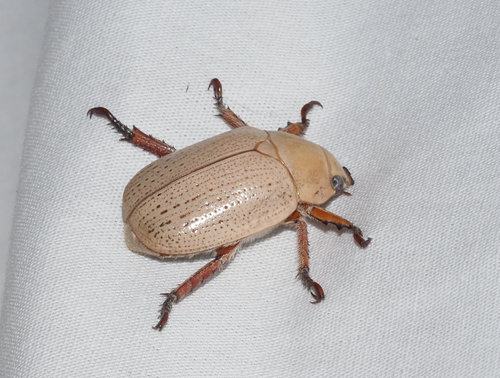
Anoplognathus pallidicollis is a relatively large scarab beetle native to Australia. It has a 24-month lifespan and reaches up to 20 millimeters in length. Adults were once commonly encountered during summer, especially around Christmas, which gave this species (and other members of its genus) the common name Christmas beetle. This beetle has rich, glossy brown elytra and clypeus, plus clawed legs covered in many barbs. Like all species in the genus Anoplognathus, its forelegs are uneven in length; this trait may help the beetle cling to thin Eucalyptus leaves. Anoplognathus pallidicollis is nocturnal and attracted to lights at night, so it is often found near outdoor lighting or crawling into houses. Research confirms the beetles are most active around sunset and in the hours immediately after sunset. Their populations are thought to be declining, most likely due to habitat loss. Larvae of this species live underground, where they feed on plant roots and decaying vegetation. They typically eat the roots of native grasses, but will also feed on the roots of crops, lawns, and pasture. In areas infested with Christmas beetle larvae, vegetation withers and yellows; this is a common cause of dead or yellow patches in suburban Australian lawns. In late winter or early spring, larvae move to the soil surface to pupate. Adults emerge several weeks later, but wait for rain to soften the soil before they can burrow out. Spring thunderstorms can trigger large numbers of beetles to emerge in a short period. In contrast, extended dry periods can trap beetles underground, causing them to die before they can emerge. Newly emerged adult beetles fly to a suitable nearby plant to feed and mate, and they prefer Eucalyptus leaves as a food source. When large numbers of adults emerge during favorable weather conditions, they can cause severe defoliation of host plants. After mating, females return to the soil to lay eggs. Adult Christmas beetles have a long active period, and remain common throughout the entire southern summer.