About Anoda cristata (L.) Schltdl.
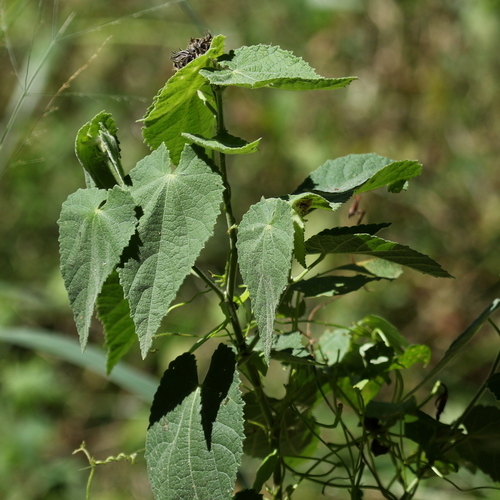
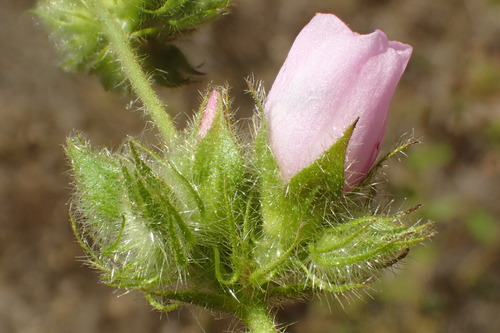
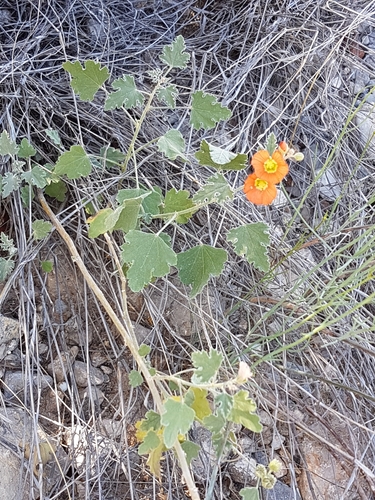
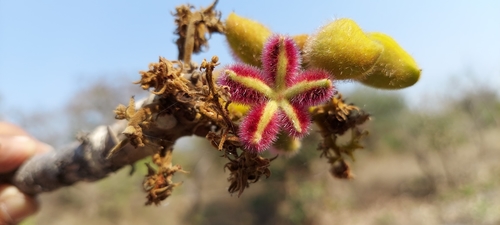
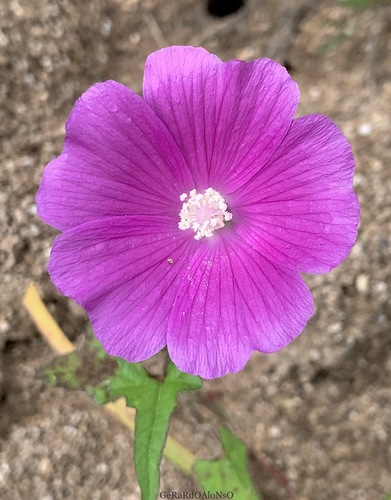
Anoda cristata (L.) Schltdl. is a species of flowering plant in the mallow family, with multiple common names including spurred anoda, crested anoda, and violettas. It is native to North and South America. It is an introduced species across the remaining regions of the Americas and in Australia, where it is often classified as a noxious weed. It has also been recorded growing as a weed in Belgium. In its natural range, it is most often found near streams, in moist meadows, and in disturbed areas. This species is an annual herb that grows erect to a maximum height between 0.5 and 1 meter. Its stem is ridged and branching. The plant has variable morphology, particularly in leaf shape, but its leaves are usually somewhat triangular and hairy. Solitary flowers grow from leaf axils on long pedicels. Each open flower measures 2 to 3 centimeters wide, with pointed sepals that range in color from green to reddish, and 5 petals that can be blueish-purple or reddish-pink. The fruit is a bristly, disc-shaped capsule divided into 9 to 20 segments, with one seed produced per segment. It sometimes acts as an agricultural weed, especially in soybean fields. In parts of Mexico, it is tolerated and even fostered as a weed of crop fields, because it is eaten by people and used as a source of medicinal remedies.