About Annona reticulata L.
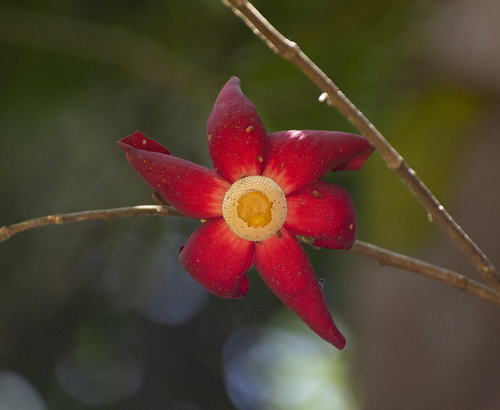
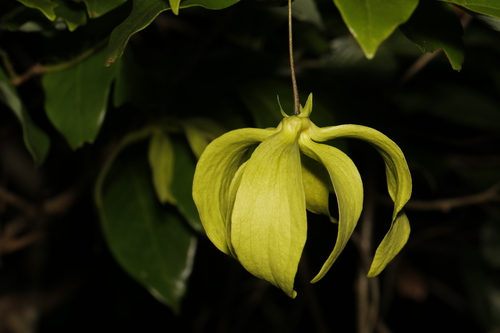
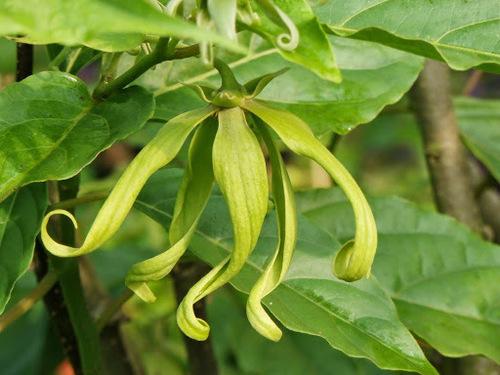
Annona reticulata L. is a small deciduous or semi-evergreen tree that reaches 8–10 metres (26–33 ft) tall, and grows an open, irregular crown. Its slender leaves are hairless, straight and pointed at the apex, and some varieties have wrinkled leaves. Leaves measure 10–20 cm (4–8 in) long and 2–7 cm (1–3 in) wide. Its yellow-green flowers are typically arranged in clusters of three or four, and reach 2–3 cm (3⁄4–1+1⁄4 in) in diameter. Flowers have three long outer petals and three very small inner petals, and its pollen is released as permanent tetrads.
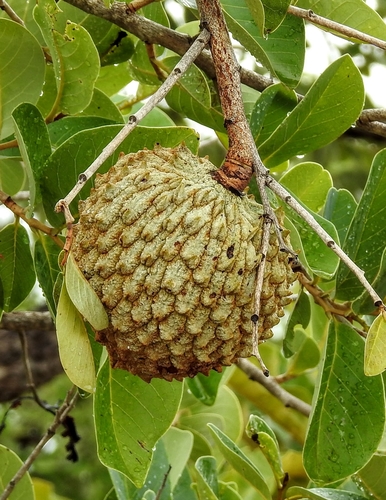
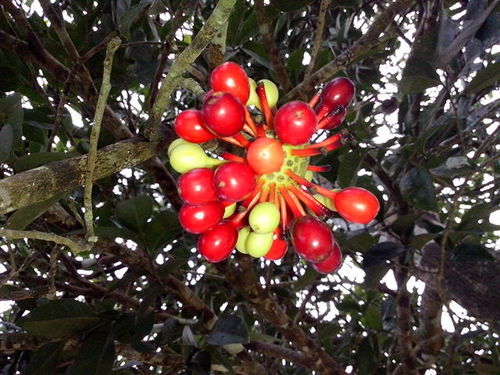
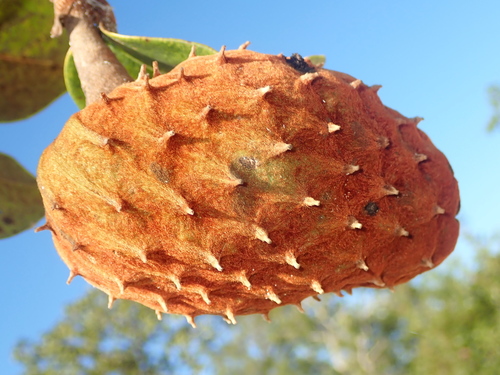
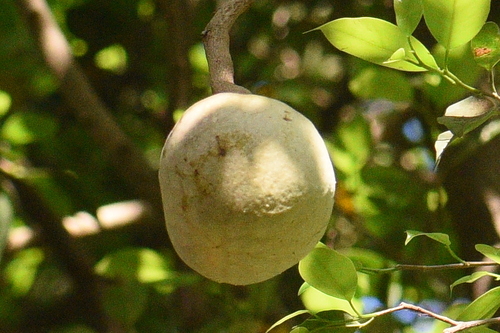
The fruits of Annona reticulata vary widely in shape, and can be heart-shaped, spherical, oblong or irregular. Fruit size ranges from 7–12 cm (3–4+1⁄2 in), depending on the cultivar. When ripe, the fruit exterior is brown or yellowish with red highlights, and shows a varying degree of reticulation that also depends on the variety. The flesh is white and pink, and contains numerous black seeds. Flesh texture and aroma range from juicy and very aromatic to hard with a repulsive taste, and the flavor is sweet and pleasant, similar to the taste of traditional custard.
Annona reticulata is native to the West Indies, within the Caribbean and Central America. It is now pantropical in distribution, and grows from sea level up to elevations of 1,500 metres (5,000 ft) in areas of Central America that have alternating wet and dry seasons. It is cultivated and naturalized across many tropical regions, including Southeast Asia, Taiwan, India, Pakistan, Australia, and Africa. In India, the species has spread from its original cultivation into the wild.
Annona reticulata can be propagated from seed, and can also be cultivated through grafting and budding. A mature tree produces 45 kg of fruits per year. Fruiting season runs from July to September in Asia, and from February to April in the Caribbean. Plants can take 2 to 3 years from planting to produce a first harvest.
As food, the custard apple (Annona reticulata fruit) can be eaten raw as a fresh hand fruit, and it is less popular than the sugar apple or cherimoya. The fruit can also be processed into juices, ice cream, or puddings, and it is cooked into a sauce in India. Over centuries, multiple traditional medicine uses have been reported for the species' dried fruits, bark, and leaves.