About Andricus lignicolus (Hartig, 1840)
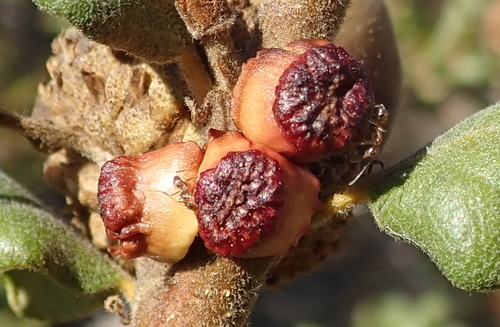
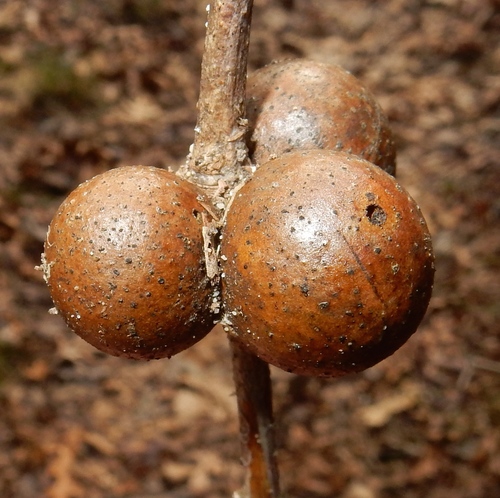
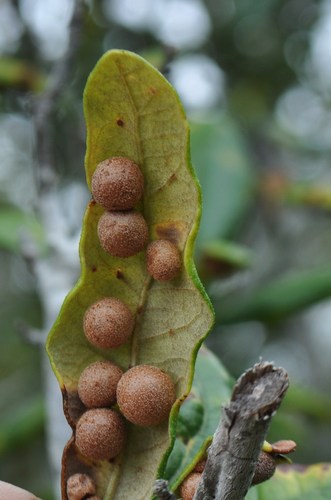
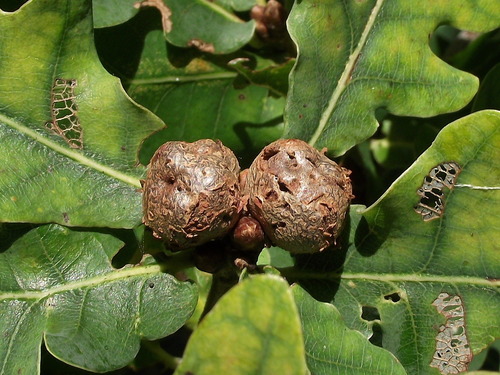
Cola-nut galls are chemically induced distortions that form on the leaf axillary or terminal buds of pedunculate oak (Quercus robur) or sessile oak (Quercus petraea) trees. These galls are caused by the agamic gall wasp Andricus lignicola (Hartig, 1840), which lays a single egg inside a leaf bud using its ovipositor. Previous synonyms for this species include A. lignicolus and A. venheurni. This gall wasp is well documented across continental Europe, with a distribution ranging from Great Britain to Asia Minor. In the agamic phase of this species' life cycle, adult wasps emerge in early summer, right after the gall first forms. Galls produced by the bisexual generation are very similar to those formed by A. kollari, develop on live buds of Quercus species, and have only ever been observed under controlled culture conditions, as of 1975. Removing and destroying cola-nut galls before they dry and adult wasps emerge can help reduce the size of an infestation. Although cola-nut galls are fairly large, and sometimes appear in large numbers on scrub oak specimens, they do not cause any measurable harm to host trees.