About Andricus curvator Hartig, 1840
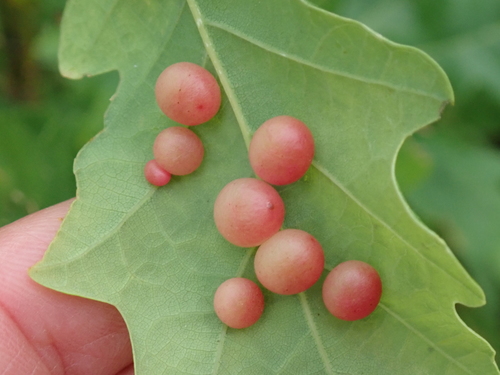
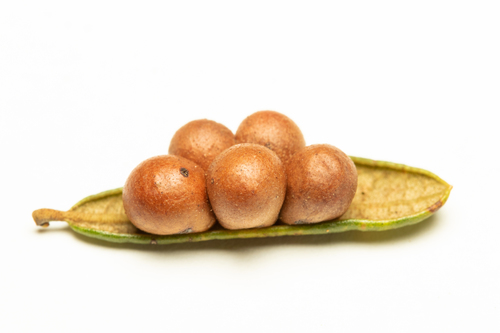
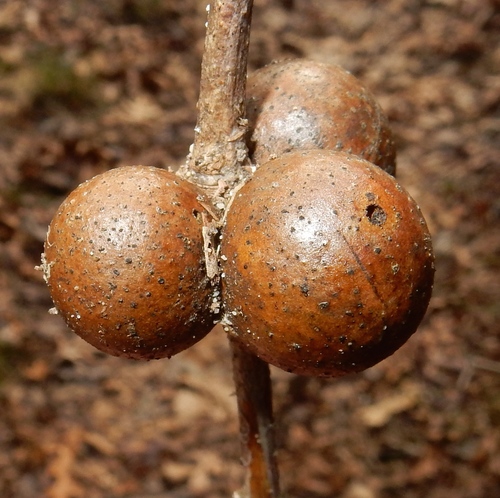
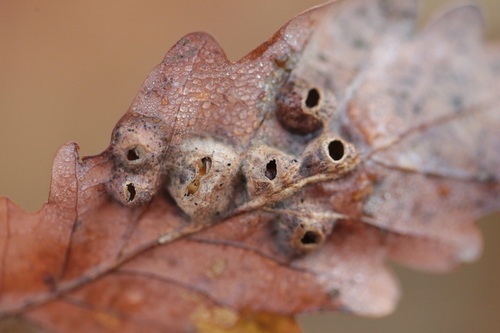
Andricus curvator Hartig, 1840 is a species of gall wasp that forms chemically induced leaf galls on oak trees, and it has both agamic (asexual) and sexual generations. While agamic and sexual generations of most similar gall wasps each produce one distinct gall on oak trees, A. curvator produces six distinct galls across its two generations. Galls from the sexual generation typically develop on oak leaves, and occasionally form on twigs or catkins. Galls from the agamic generation develop inside oak buds. This wasp was first described by German biologist Theodor Hartig in 1840, and it occurs across most of Europe. Its galls range from Ireland to Ukraine, and from Fennoscandia to the Mediterranean. The life cycle of Andricus curvator proceeds as follows: Adult gall wasps emerge in spring from bud galls that formed the previous year. The spring, sexual generation of wasps lays eggs usually on leaves, and occasionally on twigs or catkins. Leaf galls appear shortly after new leaves emerge. These leaf galls are approximately 8 mm across, roughly globular, with thin walls and a small inner gall. They often merge with each other and can cluster near the base of the leaf, causing leaf distortion. Galls that form on twigs cause the twig to bend, and can also develop at the twig tip; these galls contain an interior cavity that can be spherical or oval. A fourth type of sexual gall can grow at the base of a catkin stalk, reaching up to 5 mm in diameter. This gall bends the remaining catkin 90 degrees, and the catkin tip remains visible. Female wasps mature inside these sexual generation galls, emerging in May or June to lay their eggs on young oak buds. The asexual (agamic) generation gall, sometimes called a collared gall, is often hidden between bud scales and is difficult to detect at first. As bud scales fall away, they expose a 3 mm, smooth, brown, skittle-shaped gall with a nipple-like tip, which is usually surrounded by a pale ring. This ring is often not visible in older galls. The wasp overwinters inside this agamic gall. Andricus curvator galls have been recorded on eight oak species: Algerian oak (Quercus canariensis), Turkey oak (Quercus cerris), Portuguese oak (Quercus faginea), Spanish oak (Quercus × hispanica), sessile oak (Quercus petraea), downy oak (Quercus pubescens), Pyrenean oak (Quercus pyrenaica), and pedunculate oak (Quercus robur).