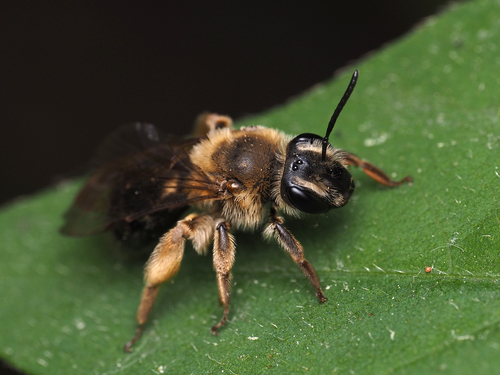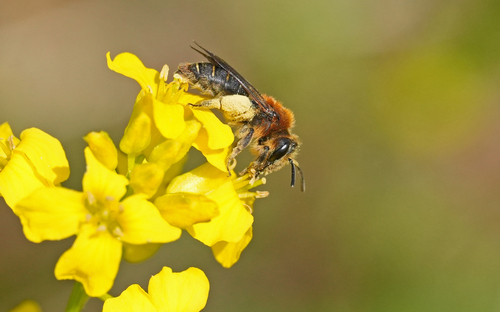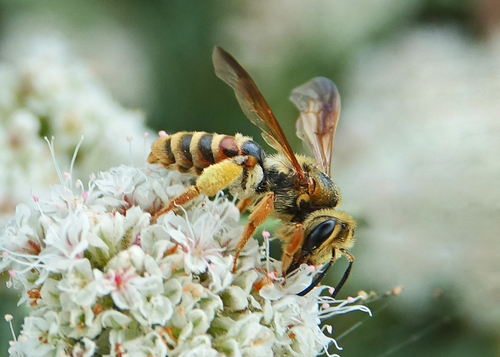
About Andrena prunorum Cockerell, 1896
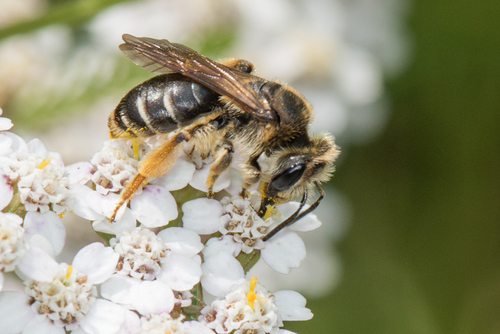
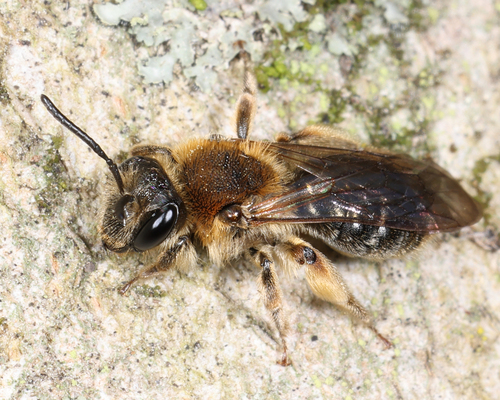
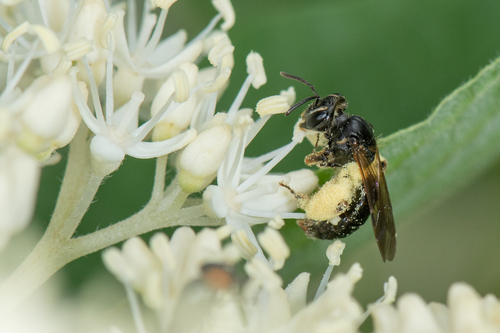
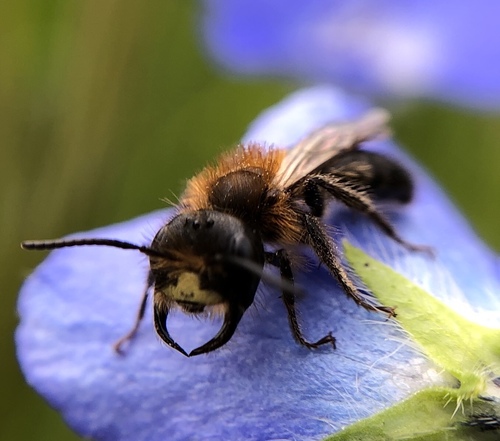
Andrena prunorum, commonly called the purple miner bee, is a species of solitary bee belonging to the family Andrenidae. This species is commonly found across the continental United States, as well as most of North and Central America. It is a spring-flying, ground-nesting bee that acts as a widespread generalist in ecological communities. Both males and females overwinter as prepupae; they mate after winter, after which females seek out new sites to dig ground burrows. Females construct small brood cells around a mixed pollen-nectar ball that nourishes a single laid egg, then seal each cell to complete this stage of the life cycle. While A. prunorum generally prefers pollen from Rosaceae plants, it will also pollinate fruit trees when available. Across much of North and Central America, this bee most often inhabits grasslands that contain vernal pools. Previous research notes that the Andrenidae family is the second-most represented bee family in British Columbia, and around 70% of solitary bee species in eastern Canada nest in the ground. However, these broader findings are not confirmed for A. prunorum specifically, because species in the genus Andrena are not easy to identify, making it difficult for researchers to isolate data specifically for this species. As a solitary bee species, every female A. prunorum is fertile, and each female constructs her own nest. There is no division of labor in this species, unlike social bees, as A. prunorum has no designated queens or worker bees. These bees are typically small in size, and can easily be mistaken for flies if not observed closely. Solitary bees including A. prunorum emerge in spring, when their host flowers begin blooming. After mating, females dig nests that start with a vertical tunnel extending a few inches into the ground. They then dig a side tunnel that ends in a brood chamber, which measures approximately 1 cm wide and 2 cm tall. After coating the chamber with a waxy substance, the female collects pollen and nectar to form a ball around 6 to 8 mm across. She deposits a single egg on the pollen ball, seals the chamber, and begins constructing another brood chamber. A single female can dig between 8 and 10 brood chambers total. After the egg hatches, the larva feeds on the stored pollen ball. In autumn, the larva molts into an adult, which remains resting in its chamber through the winter. The new adult emerges the following spring to repeat the cycle.