About Andrena hattorfiana (Fabricius, 1775)
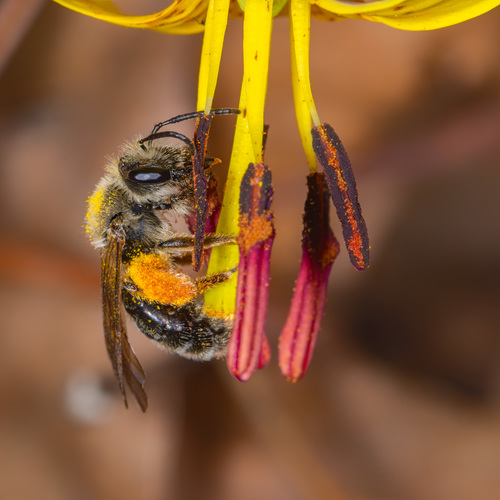
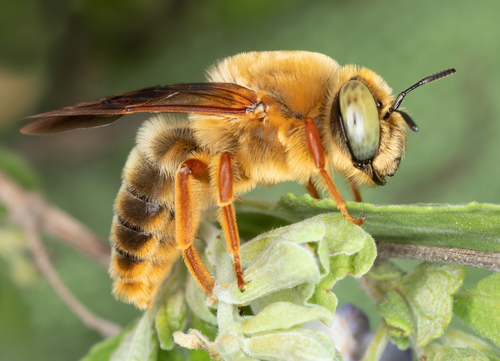
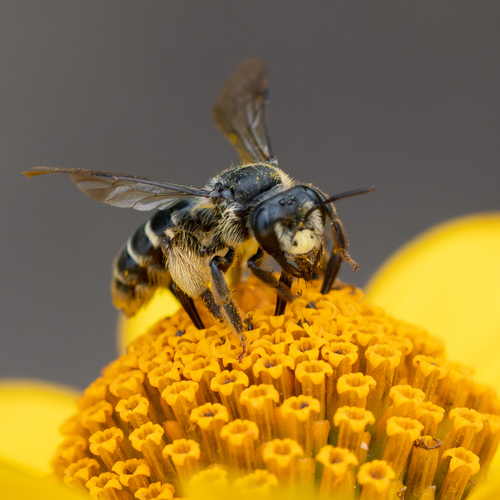
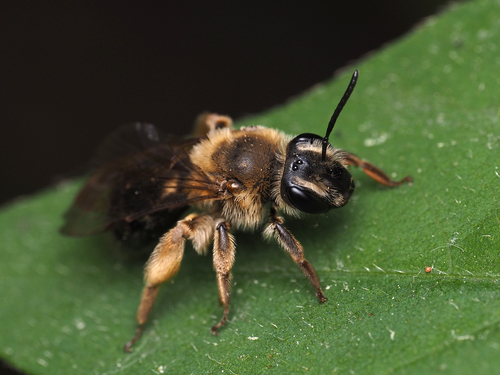
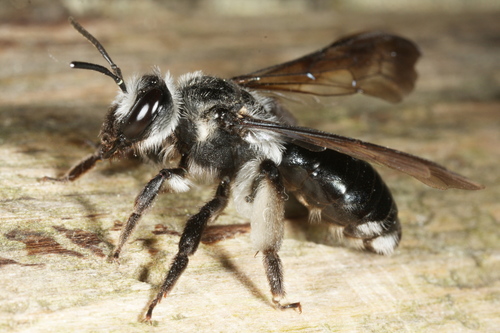
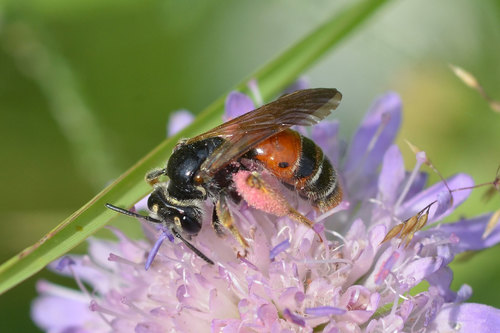
Adults of Andrena hattorfiana reach a body length of 13–16 millimetres (0.51–0.63 in). They have a black-brown body covered in sparse light hair, with the first and second abdominal segments colored reddish. Females carry a pollen basket made of curved hairs on the sides of the thorax.
This is an endangered solitary bee species that occurs across most of Europe and the Near East. Its range extends from central Spain through Ukraine to the Urals, and from Asia Minor to the Caucasus; to the north it reaches southern England, south Wales, Norway and Sweden up to 60.5 ° N, Finland up to 62.5 ° N, and Russia as far as Perm; to the south it reaches Sicily, Peloponnese and southern Turkey, and is not present in Crete. The subspecies dimidiata BRULLE, 1832 is found in the eastern Mediterranean area, westward as far as Sicily. The species as a whole is generally uncommon.
Its habitat includes dry meadows of both high and low nutrient content, flood dams, road embankments, and forest edges, found from lowlands up to montane elevations.
Andrena hattorfiana is an oligolectic species that feeds on plants in the Dipsacaceae family. The main pollen source across its range is Knautia arvensis, while the secondary pollen source is Knautia dipsacifolia. If Knautia plants wilt before the end of the bees' flight period, the bees will also collect pollen from Scabiosa columbaria. This solitary bee can be easily spotted from distances of up to 5 meters away, and can be encountered between May and August.
Females typically lay their eggs in nests they excavate themselves in sandy soil. Each nest holds five to ten brood cells, with one egg and a store of pollen to feed the developing larva per cell. Under good foraging weather conditions, females produce one new offspring per day, for a total lifetime production of five to ten offspring. Nests are built in dry areas of traditionally managed hay fields, medium-pressure horse-grazed pastures with sparse vegetation, and on human-trampled paths.
These bees depend heavily on pollen as a critical resource for species survival. For 10 reproducing female Andrena hattorfiana, the required number of pollen-producing plant individuals ranges from 27 to 361. Reliance on pollen from a narrow range of flower species has contributed to this species' endangered status, as has the strict specific conditions required for nest building. Additional threats include frequent infection by the host-specific cleptoparasite Nomada armata, which parasitizes a large proportion of brood cells in local populations, competition for pollen from other insects, and habitat loss and fragmentation. The main cause of the species' endangerment is reduced distribution of its food plants, driven by the expansion of large farm units and loss of traditionally managed meadows. Overall, Andrena hattorfiana is endangered due to pollen competition, insufficient habitat variability, and the lack of sufficient traditionally managed meadows.
The primary cleptoparasitic cuckoo bee parasite of this species is Nomada armata. Adult Andrena hattorfiana are sometimes also infested by the strepsipteran Stylops melittae.