About Andrena fulva (Müller, 1766)
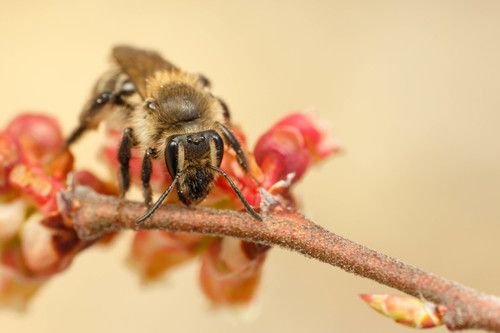
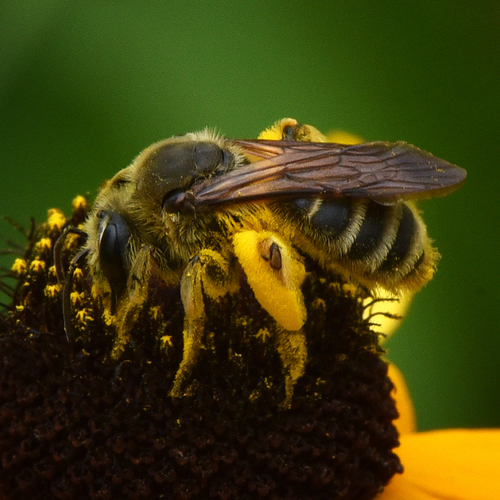
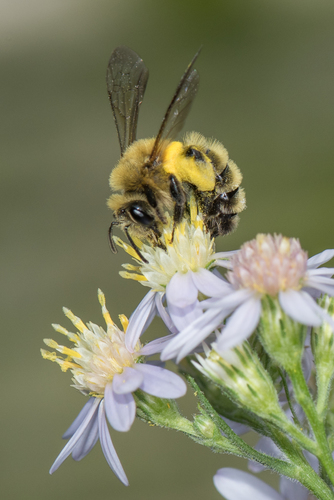
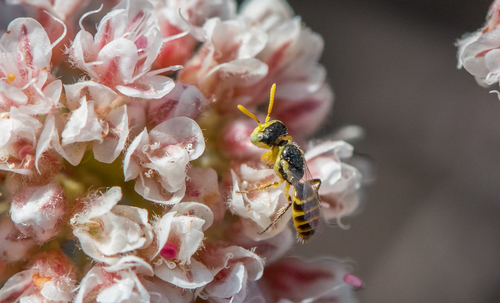
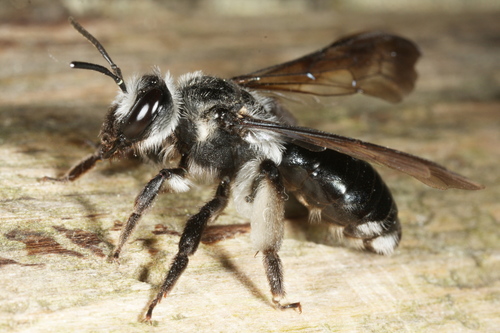
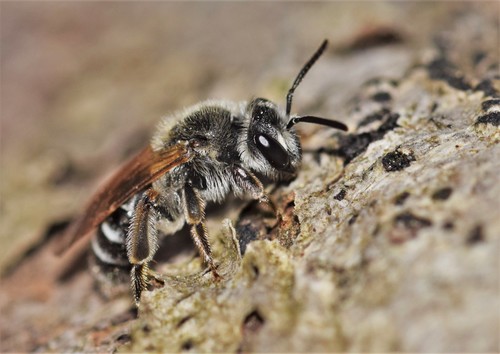
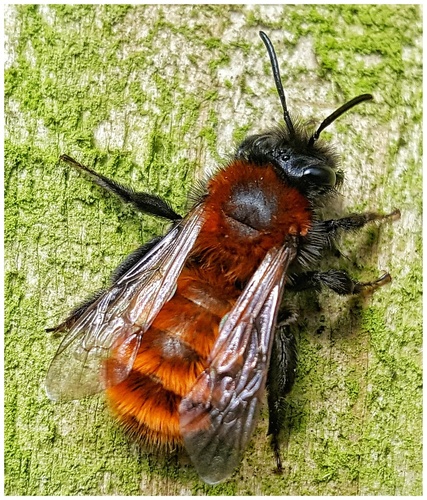
Andrena fulva, commonly known as the tawny mining bee, is a European species belonging to the sand bee genus Andrena. Males measure 10–12 mm (0.4–0.5 in) in length, while females are 8–10 mm (0.3–0.4 in) long. Females have fox-red hair covering the dorsal surfaces of their thorax and abdomen, and black hair on their head and ventral surface. Males are less visually distinctive: they are covered in golden-brown or reddish-brown hairs, have long white hairs on their face, and a tooth on each mandible. This species ranges across Europe, from the Balkans to southern Scandinavia, including the United Kingdom and Ireland. It inhabits areas with short vegetation, specifically light woodlands, dry grasslands, parks, and gardens. Though it is widely distributed across its range, it occurs at low population density. In the United Kingdom, it is found across lowland England and Wales, and at only a small number of sites in southern Scotland. In Ireland, the species was only recorded from two locations in County Kilkenny in 1927, and was considered extinct there until 2012, when it was rediscovered at multiple sites across the country. Tawny mining bees fly between March and May. They forage on a wide variety of plants that produce nectar and pollen, including beech (Fagus sylvatica), blackthorn (Prunus spinosa), buttercup (Ranunculus sp.), daffodils, garlic mustard (Alliaria petiolata), gooseberry (Ribes uva-crispa), hawthorn (Crataegus monogyna), holly (Ilex aquifolium), maple (Acer sp.), oak (Quercus sp.), plum (Prunus domestica), sallow (Salix sp.), sycamore (Acer pseudoplatanus), and wayfaring-tree (Viburnum lantana). Mating takes place in spring, after which the male dies and the female begins constructing her nest. Sometimes, more than one hundred females will build nests within just a few square metres of area, but the species does not form colonies: every female maintains her own independent nest. Because of this nesting behavior, the tawny mining bee is classified as a solitary communal bee. Each nest is a vertical shaft 200–300 mm (8–12 in) deep, with several brood cells branching off the main shaft. The female fills each brood cell with a mixture of nectar and pollen, then lays a single egg per cell. Larvae hatch within a few days, grow quickly, and pupate within a few weeks. After hibernating over the winter, adult tawny mining bees emerge the following spring.