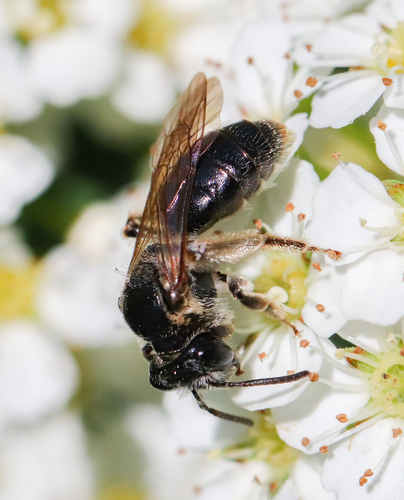
About Andrena cineraria (Linnaeus, 1758)
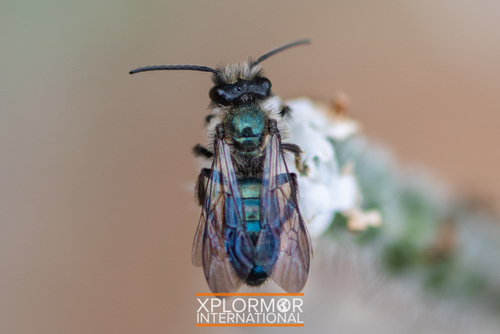
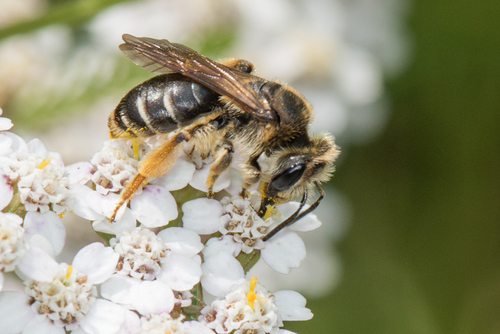
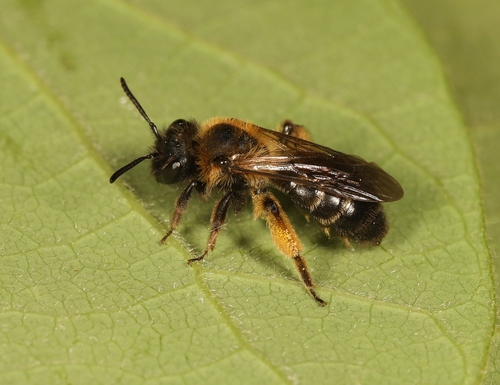
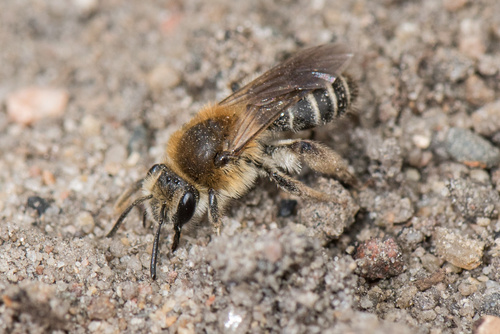
Andrena cineraria (Linnaeus, 1758), commonly called the ashy mining bee, can be identified by sex-specific physical traits. Females are entirely black, with two broad grey hair bands crossing the thorax. They have white hairs only on their front femora, and twelve antennal segments. Males are also black, but their entire thorax is covered in grey hairs. They have a tuft of white hairs on the lower face, white hairs on all femora, and thirteen antennal segments. This species is common and widespread across Europe, ranging from Ireland through central Europe to Scandinavia. It is common throughout the United Kingdom, but occurs less frequently in northern Scotland. Ashy mining bees prefer to nest in tended lawns, flowerbeds, parkland, calcareous grassland, orchards, and along the borders of agricultural land. The ashy mining bee is a solitary bee, because every female constructs and occupies her own nest. Adult bees fly from April to early June, and are most visible during the flowering period of fruit trees, for which they are an important pollinator. After mating in spring, they are often seen hovering just above ground level. After mating, males die, and females begin to build their nests. A nest is a simple underground burrow, with several branching brood cells. Burrow entrances can be identified by the conical mounds of excavated soil they leave on the surface. Females fill each brood cell with a mixture of nectar and pollen, then lay a single egg inside each cell. Larvae hatch within a few days, grow quickly, and pupate within a few weeks. Pupae hibernate over the winter, and new adults emerge the following spring; males emerge earlier than females. Nests of the ashy mining bee are frequently invaded by cleptoparasitic cuckoo bees.