About Andira inermis (W.Wright) DC.
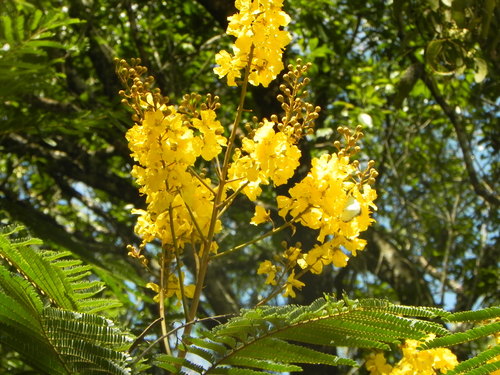
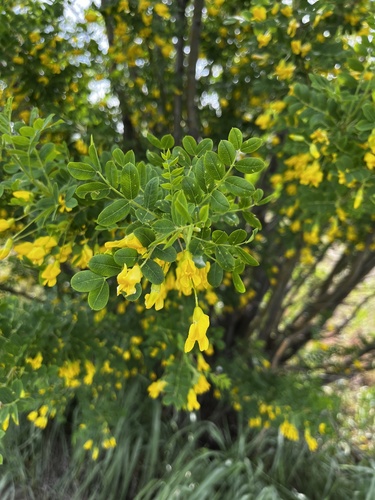
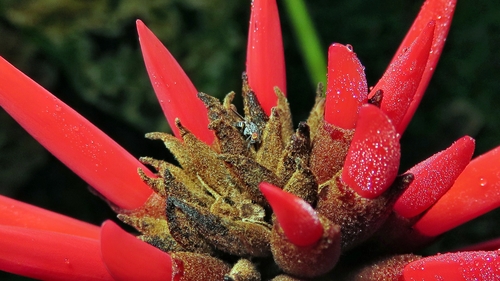
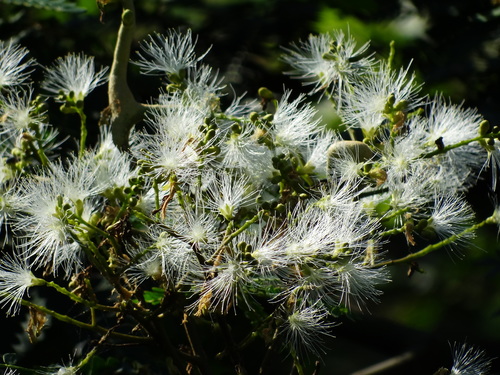
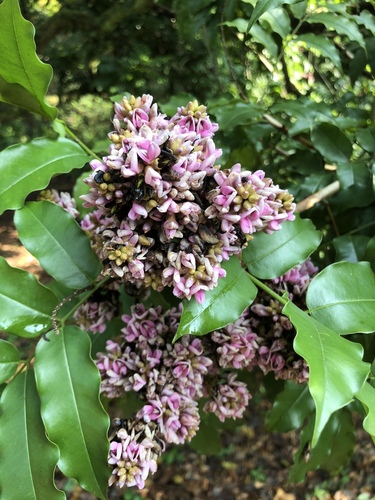
Andira inermis (W.Wright) DC. is a nitrogen-fixing tree with medicinal properties that is native to the region stretching from southern Mexico through Central America to northern South America, specifically Peru, Bolivia, and Brazil. It has been introduced to the Caribbean, the Antilles, Florida, and Africa, and is regularly pollinated by bees. Due to its wide distribution and multiple uses, this tree has many common regional names: in El Salvador it is called almendro macho; in Honduras it is called almendro de río (river almond) and guacamayo; it is also widely known as bastard cabbage tree, cabbage angelin in the United States, cabbage bark in Belize and the United States, cabbage tree, carne asada in Costa Rica, harino in Panama, Jamaica cabbage tree, moca in Puerto Rico, partridge wood in the United States, worm bark, and yellow cabbage tree. Mature Andira inermis trees grow to approximately 35 metres in height and 0.7 metre in trunk diameter. They are evergreen, do not have buttressed roots, feature a dense crown, and produce pink flowers. This tree grows primarily in riparian forest zones along rivers, but can also be found in drier areas including roadsides, pastures, and woodlands. Andira inermis is known for its unpleasant cabbage-like scent. Its leaves are large; mature leaves are green, while newly developing leaves are tan in color. The wood of Andira inermis is used for lumber. Its smooth gray bark is reported to have narcotic, laxative, and vermifuge properties. Many different bee species pollinate Andira inermis. One study conducted at flower sites on Andira inermis trees in Costa Rica found that 70 bee species visited the trees' flowers, though only a few of these species are likely true pollinators. On average, these flower sites received 800 individual bees per site. Andira inermis has a long history of use in traditional Nigerian medicine, where it has been historically used to alleviate sickness and treat diabetes. A study on rats that measured toxicity and glucose levels confirmed that Andira inermis is a viable treatment for diabetes, as treated rats showed decreased blood glucose. Traditional medicine practitioners often use Andira inermis to eliminate intestinal worms.