About Ancistrocerus gazella (Panzer, 1798)
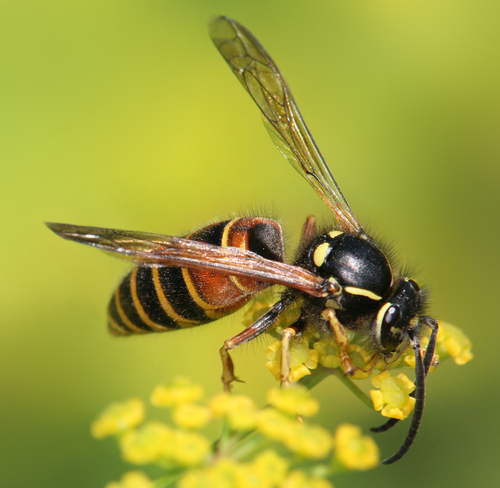
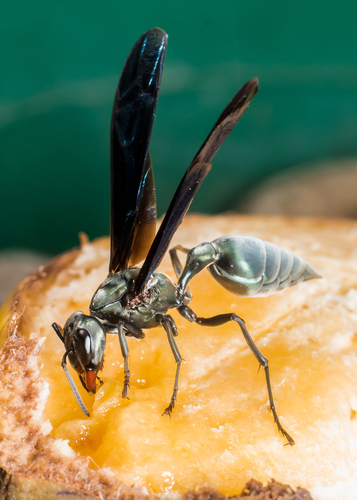
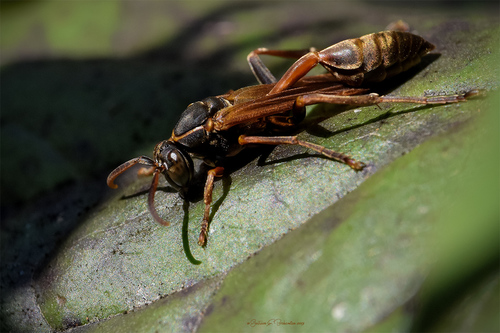
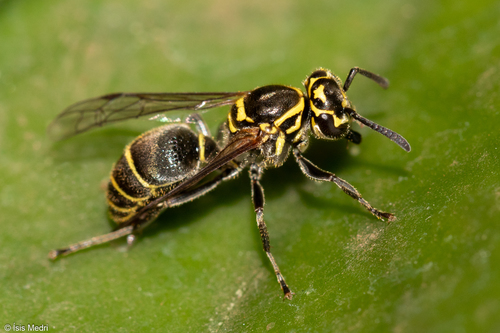
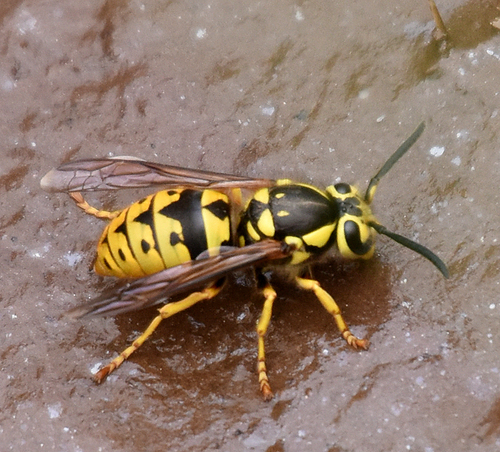
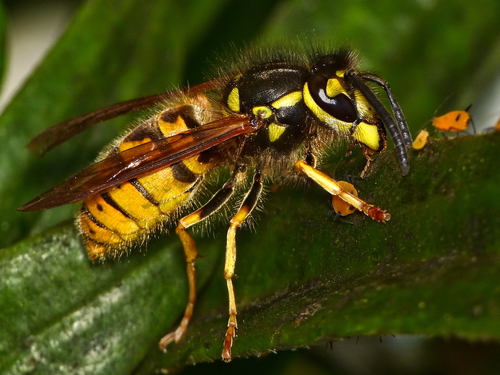
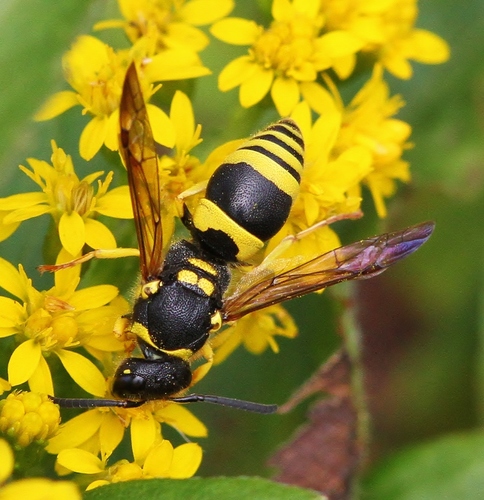
Ancistrocerus gazella (Panzer, 1798), commonly called the European potter wasp or European tube wasp, is a species of potter wasp. Adult females collect up to 20 caterpillars for each single-cell nest they construct. Larvae feed on these stored caterpillars inside the nest, which the female seals with molded mud. Adult wasps feed on nectar and aphid honeydew. Males of this species cannot sting, and female stings are not painful. Individuals can be spotted on windows, foraging for nectar on flowers, or seeking small cracks and holes to use as nesting sites. This wasp is native to Europe, with a range that includes Norway, Sweden, the Netherlands, France, Spain, Germany, Italy, Poland, Austria, Ukraine, Romania, and Bulgaria. Within the British Isles, it is found in England as far north as Stockton-on-Tees, throughout Wales, and at scattered locations in Ireland. It is also present in Morocco. It inhabits a wide variety of habitats that have suitable sandy and clay soil, including river banks, coastal areas, parkland, open woodland, and urban areas. The species became established in Auckland, New Zealand in 1987, and can now be found as far south as Otago, near the southern end of New Zealand. In late spring, adult wasps emerge from their overwintering sites and feed on nectar and pollen from plants including sea-holly, bramble, hogweed, and thistles. After mating, females search for appropriate nest sites, which are most often plant cavities such as hollow stems, pith cavities in dead twigs, or abandoned tunnels created by wood-boring insects. Inside these cavities, nest cells are arranged in a line, separated by clay partitions. The female lays an egg in the first cell, then stocks the cell with multiple paralysed caterpillars before sealing it with a clay plug. Additional cells are constructed following the same pattern. Each wasp egg hatches within a few days, and the larva takes 10 to 12 days to consume its stored supply of caterpillars. After either a short resting period or an extended diapause, depending on the season, the larva spins a cocoon, and the adult wasp emerges approximately two weeks later. The wasp moistens the clay plug to soften it before exiting into the open.