About Anax junius (Drury, 1773)
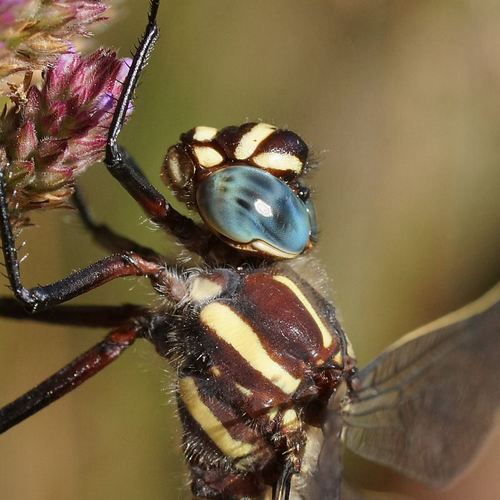
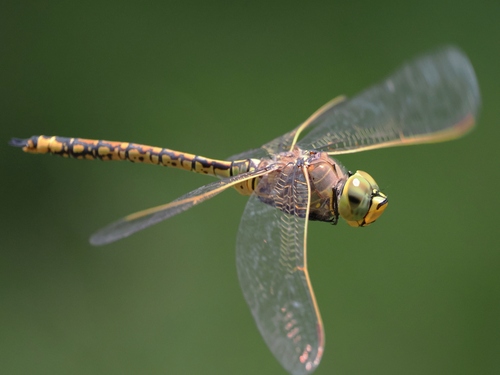
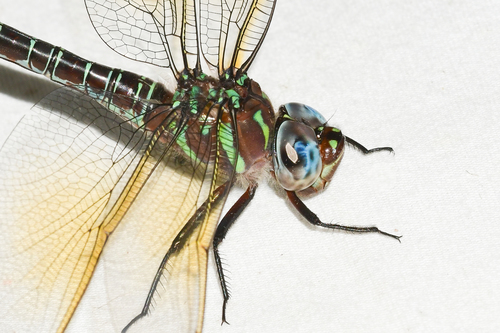
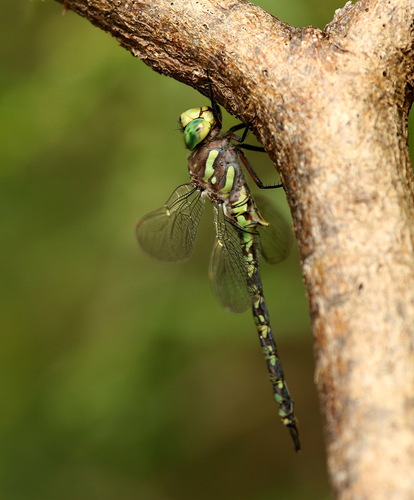
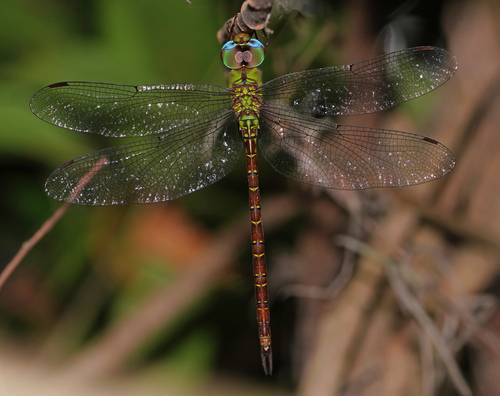
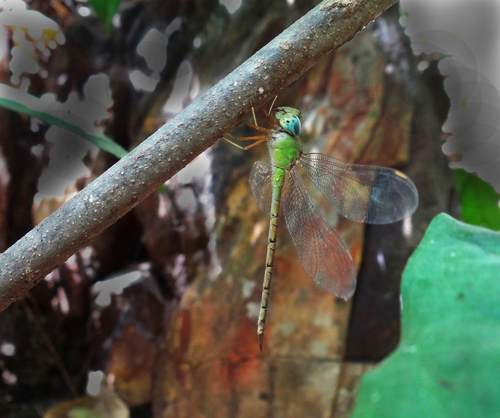
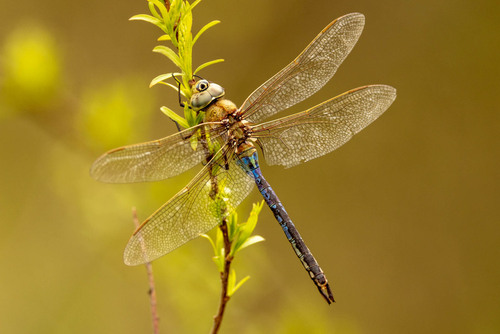
The common green darner, Anax junius (Drury, 1773), is a large species of dragonfly. Adults measure 6.8 to 8 centimetres (2.7 to 3.1 inches) in length, with a maximum wingspan of 10 centimetres (3.9 inches). Both sexes share an unmarked green thorax. Mature males have bluish-purple abdomens, where the first few segments are the brightest, along with a black dorsal stripe that becomes broader toward the end of the abdomen. Immature males and most females have reddish-brown abdomens, though some females share the same patterning as mature adult males. Their wings are clear when the dragonfly is young, but typically develop an amber tint with age, and this tinting is most prominent in females. Both sexes have a distinct black bull's-eye mark on the frons (the portion of the face in front of the eyes); this clear field mark distinguishes common green darners from the superficially similar comet darner, Anax longipes. Among North American darners, the behavior of ovipositing while remaining in tandem is unique to this species. Common green darners are widespread across the continental United States and southern Canada. Their range occasionally extends as far south as Panama, most often during the winter. Established populations also exist in Hawaii and the Caribbean. Vagrant individuals have been recorded far outside the species' normal range, including sightings in Alaska, Russia, China, Japan, France, the United Kingdom, India, and Bermuda. These out-of-range vagrants are most likely migrating individuals blown off their intended course by strong winds or storms. Nymphs of this species develop in lakes, ponds, and slow-moving streams and rivers. Adult common green darners are most often encountered close to the aquatic habitats where nymphs develop, but they are strong fliers and can be found across a wide range of habitats including grasslands, forests, and urban areas.