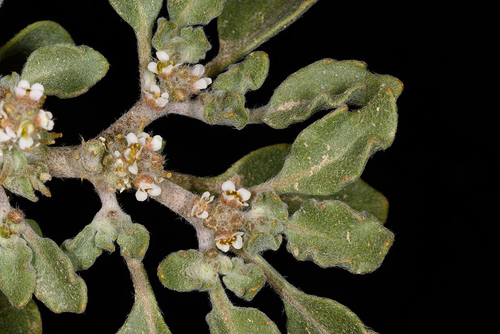
About Anastatica hierochuntica L.
Anastatica hierochuntica L. is a plant with extremely high resistance to desiccation. Although it is an annual species, the plant develops lignification after finishing its life cycle, becoming a persistent woody skeleton. Its branches have the unique trait of contracting when dry into the shape of a closed fist, which holds its seed bank. The dead skeletal form can stay in its original location for many years, and reopens when exposed to moisture or water. After the rainy season ends, the plant dries out, drops its leaves, curls its branches into a tight ball, and enters aestivation. Fruits stay attached and closed inside this ball, protecting the seeds and stopping them from dispersing too early. The seeds are very tough and can stay dormant for years. When moistened again during a later rainy season, the ball uncurls, and the plant exits its dormant state. This causes the capsular fruits to open and release the seeds. If there is enough water, dispersed seeds will germinate within hours. After the plant curls into a ball, wind can easily lift and drag it over large distances, so these plants travel across steppes and deserts, crossing national borders in Asia and spreading their seeds across these areas. Some seeds are dispersed near the parent plant when raindrops hit a spoon-shaped appendix on the seeds. Seeds have a sticky coat that helps them stick to soil, but they can also be carried downstream by surface water runoff. However, any seeds swept downstream do not survive. The curling and uncurling process is completely reversible and can be repeated many times. This ability is credited to the presence of trehalose, a disaccharide sugar that is involved in multiple cryptobiosis mechanisms. Some sources state that rehydrated plants grow new leaves, flowers, and fruits, but this claim is disputed; instead, seeds may sometimes germinate and grow into new plants while still held in the fruit on the dead parent plant. Anastatica hierochuntica L. is called the most famous tumbleweed. When dry, the ball is said to detach from its original position and be dispersed by wind. This tumbleweed habit has been interpreted as a way to avoid being buried in sand dunes. However, this tumbling habit may only exist in written descriptions, or only happens rarely when the plant is accidentally uprooted. Anastatica hierochuntica L. occurs in arid regions of the Middle East and the Sahara Desert, including parts of North Africa and areas of Iran, Egypt, Israel, Saudi Arabia, Iraq, Jordan, and Pakistan.