About Anas sparsa Eyton, 1838
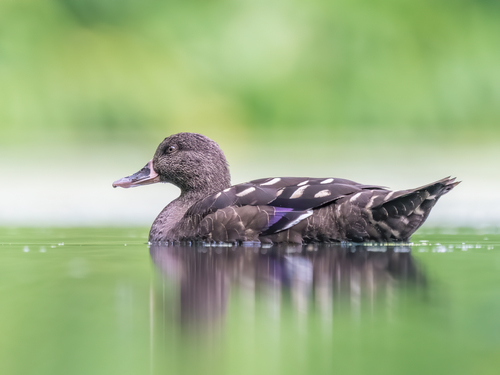
The African black duck (scientific name Anas sparsa Eyton, 1838) is a medium-sized waterfowl species. Adults measure 48–57 cm (19–22 in) in total length, and males are larger than females. Its plumage is primarily black, with distinct white markings on the back, a dark bill, and orange legs and feet. A purplish-blue speculum (the colored patch on the wing) is often visible, particularly when the bird is in flight. This species has several common alternative names: black river duck, and the subspecies A. s. leucostigma is also called the West African black duck or Ethiopian black duck. African black ducks are found across central, western, eastern, and southern Africa. Their main distribution range covers eastern and southern sub-Saharan Africa, extending from South Africa northward to South Sudan and Ethiopia. Isolated outlying populations also exist in western equatorial Africa, specifically in southeast Nigeria, Cameroon, and Gabon. This duck is very shy and territorial. It is most commonly encountered in pairs or small flocks. Breeding occurs at different times of the year across different parts of its range. Clutches contain 4 to 8 eggs. Only the female incubates the eggs, which takes approximately 30 days, and only the female cares for the young after hatching. Chicks fledge 86 days after hatching. Ecologically, African black ducks prefer to occupy rivers and streams in wooded African hills during the daytime, and move to large open bodies of water at night. They build cup-shaped nests from driftwood and matted grass, placing their nests on the ground near running water, always positioned above flood level.