About Anas gibberifrons S.Müller, 1842
The Sunda teal, with the scientific name Anas gibberifrons S.Müller, 1842, is also called Bebek cokelat or Itik benjut. It is a dabbling duck that occurs in open wetlands in Indonesia and Timor-Leste. The species formerly classified the Andaman teal (Anas albogularis) and the grey teal (Anas gracilis) as its subspecies, but it is currently considered to be monotypic. A 2009 molecular phylogenetic study that compared mitochondrial DNA sequences from ducks, geese, and swans in the family Anatidae found that the Sunda teal is a sister species to the Australian-native chestnut teal (Anas castanea).
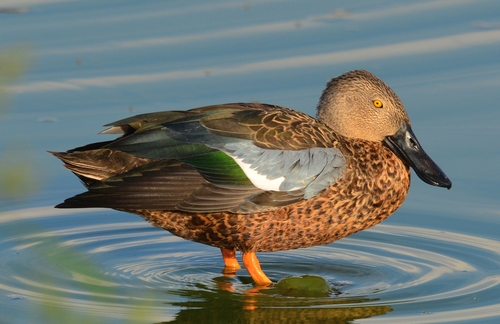
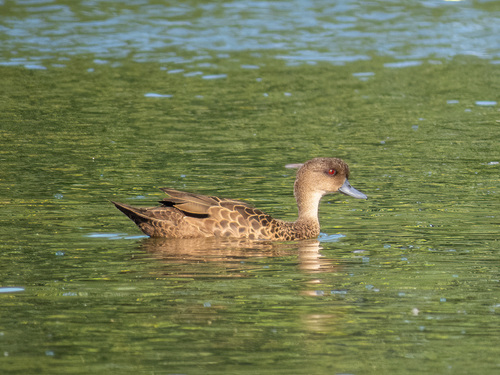
The Sunda teal is a mottled brown duck with white and green flashes on its wings. Unlike the related chestnut teal, where males and females have strikingly different colouring, male and female Sunda teal share identical colouration. The nominate Sunda teal has almost the same colouration as a female chestnut teal, and can only be told apart by its lighter-coloured neck, paler face, and especially its bulging forehead. The Andaman teal has a variable amount of white on its forehead and around its eyes. The Rennell Island teal resembled a smaller version of the nominate subspecies, with a stubbier bill. Juvenile Sunda teal are paler than adults, particularly on the head.
The Sunda teal nests close to the freshwater lakes and marshes it favours. It usually nests on the ground, but will also nest in tree holes or rabbit burrows. It is a vocal duck, particularly at night: the male produces a soft peep, while the female has a loud quack.