About Anas chlorotis G.R.Gray, 1845
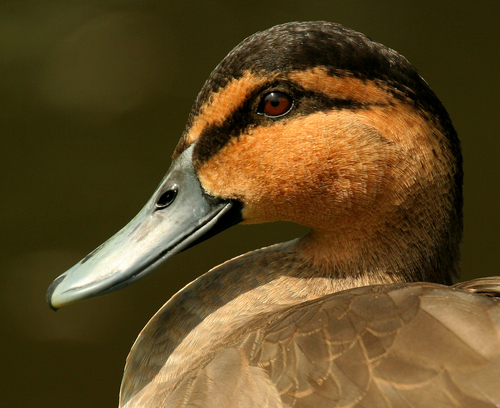
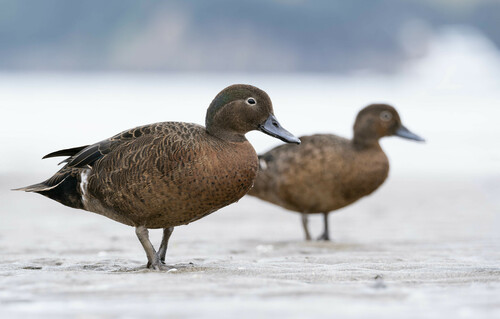
This species, scientifically known as Anas chlorotis G.R.Gray, 1845, is commonly called brown teal. During the non-mating season, males, females, and juvenile brown teal have no distinctive differences. All individuals have a white eye ring, and mottled brown colouring on their heads and throats. During breeding season, males change colour: they develop a green head, a chestnut breast, and a white stripe on each side of the body. Some males also grow a white clerical neck band, and colour brightness varies between individual males. This endangered species occurs predominantly on offshore islands, and also lives in predator-proof sanctuaries on the New Zealand mainland, such as Tawharanui Regional Park. Formerly, it was widespread across the New Zealand mainland, but it disappeared from mainland New Zealand due to introduced predators including cats, dogs, and rats, which easily preyed on this unwary, weakly flying bird. The IUCN categorizes this species as VU D1, meaning fewer than 1000 adult birds remain. Birdlife International upgraded the species to endangered in 2007, and this change will be reflected in the next update of the IUCN Red List. Apart from Fiordland's Arthur Valley, there is only one other site in the South Island of New Zealand where wild brown teal live. Since 2017, the Department of Conservation and Project Janszoon have released just under 300 of these waterfowl in the Awapoto River in Abel Tasman National Park, and the birds are breeding successfully at this location.