About Anas capensis J.F.Gmelin, 1789
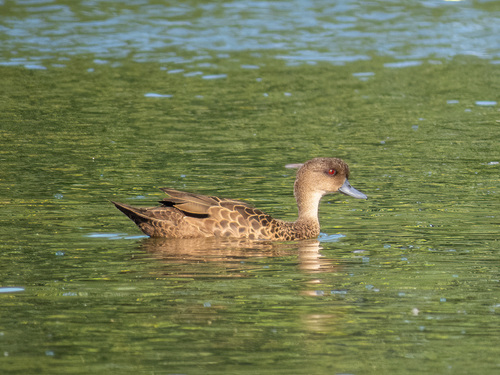
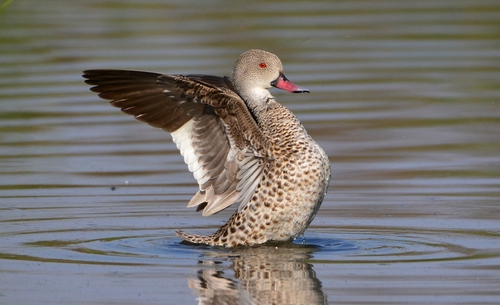
Like many southern duck species, male and female Cape teal (Anas capensis) look similar to one another. This duck has very pale, mainly grey plumage, with a browner back and pink coloring on its bill; young birds do not have this pink bill marking. The species is generally quiet, and only makes noise during mating displays. Breeding males produce a clear whistle, while females make a feeble quack. No other duck that shares the Cape teal's range can be mistaken for this species. The Cape teal is essentially non-migratory, though it will move opportunistically following rainfall. It is thinly distributed across a wide range, and is rarely seen in large groups, except during moulting when flocks can number up to 2000 individuals. The Cape teal feeds by dabbling, and its diet consists of aquatic plants and small animals including invertebrates, crustaceans, and amphibians. It builds its nest on the ground, under vegetation, and close to water. The Cape teal is one of the species covered by the Agreement on the Conservation of African-Eurasian Migratory Waterbirds (AEWA).