About Anania lancealis (Denis & Schiffermüller), 1775
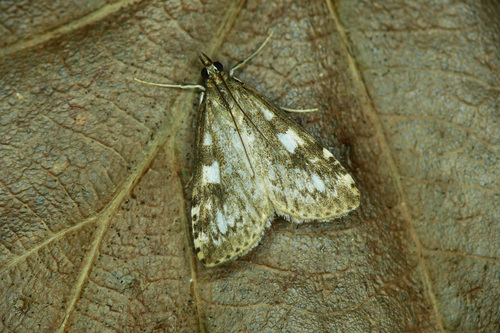
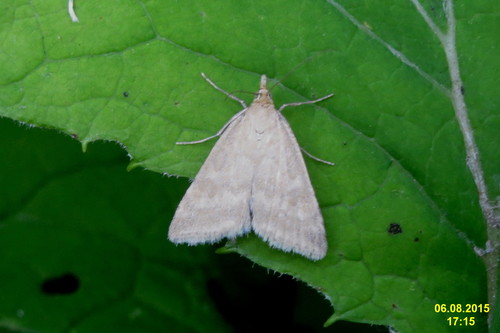
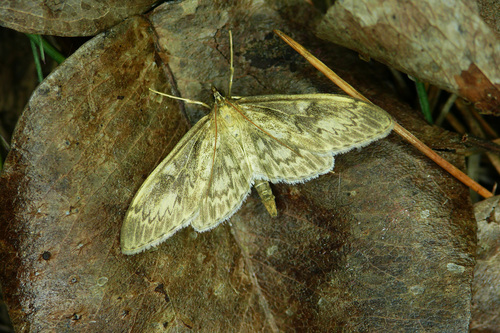
Anania lancealis (Denis & Schiffermüller), 1775 has a wingspan ranging from 30 to 34 mm. Its forewings are long and narrow, with particularly pronounced narrowness in males. The upper surface of the wings is whitish, marked with brown lines and patches. Meyrick described the species as follows: the forewings are whitish ochreous, mostly suffused with fuscous-grey. The lines are dark fuscous: the first is irregular, while the second is serrate, curved, and indented below the middle. This second line is preceded by a clear blotch in the disc and edged posteriorly by a clear line. There are small dark fuscous orbicular and discal marks, separated by a clear patch. The hindwings match the forewings in appearance, except that anterior markings are absent. Mature larvae are green, with a darker dorsal line broadly edged with grey-whitish or grey. The spiracular area is whitish, and the head is pale brownish with dark speckles. Additional information can be found in Parsons et al. These moths fly at dusk from May to mid-August, with the flight period varying by location. The larvae feed primarily on hemp agrimony (Eupatorium cannabinum), and have also been recorded feeding on ragwort (Jacobaea vulgaris), wood sage (Teucrium scorodonia), greater water-parsnip (Sium latifolium), and woundworts (Stachys species). Larvae pupate inside a silken cocoon, where they also hibernate over the winter. This species occurs across the Palearctic realm, including most of Europe. It inhabits woodland and marshy fenland, which are its preferred habitats.