About Anagyris foetida L.
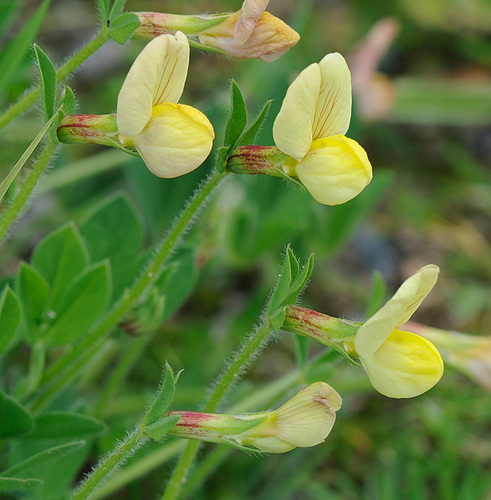
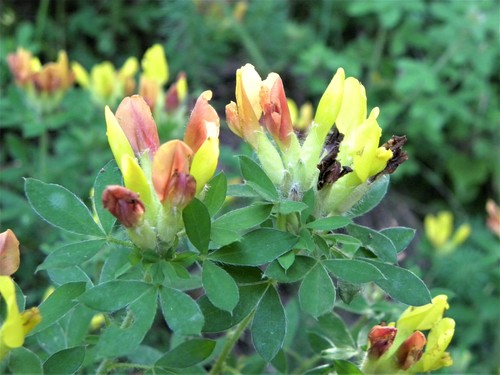
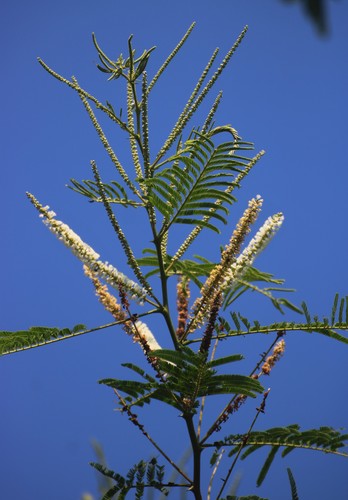
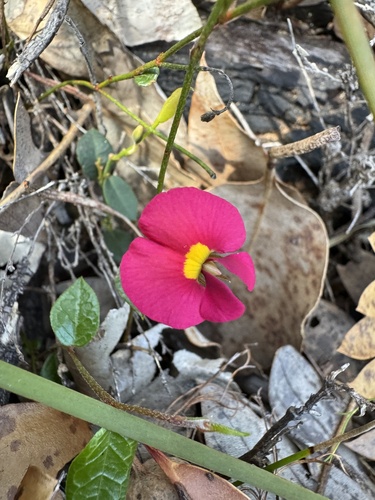
Anagyris foetida, with the English common name stinking bean trefoil, is a flowering plant species belonging to the Fabaceae family. It grows as a malodorous, summer-deciduous shrub or small tree reaching 2–4 meters in height. It has green twigs bearing grey-green trifoliate leaves, which are covered in silvery hairs on their lower surface. Its yellow, Laburnum-like flowers with red tints grow on the previous season's growth, and are pollinated mainly by birds and bees, most notably the buff-tailed bumblebee. A large red pigment spot is located on the exterior of the flower's standard petal, while the interior of the standard holds many small, deep red spots.
This plant has a circum-Mediterranean distribution across Europe and North Africa, with its range extending into Turkey, Iran, and the Arabian Peninsula. A. foetida is a Tertiary-period tropical or subtropical relict species, a classification suggested in part by its unusually large and heavy seeds. This indicates its original native range may have been located within a refugium covering the Balkans, Türkiye, and the Black Sea coastal region of the Caucasus. This understanding is complicated by the fact that A. foetida is also an archaeophyte, an ancient introduction with an uncertain original homeland. In France, it is a rare protected species now found only in coastal départements; it once grew in Alpes-Maritimes, but is now extinct there. It grows in calcareous soils in seasonally arid areas exposed to full hot summer sun, and prefers rocky limestone escarpments, such as the current population at Mont Faron. It is often found among the ruins of castles and abbeys, which suggests it may be a relic of past cultivation, either for medicinal purposes or to produce arrow poison for military use.
As early as 1947, Canon Fournier observed that A. foetida is primarily pollinated by birds. This was confirmed by a three-year study of pollinators visiting two A. foetida populations in Southwest Spain, published by Ortega-Olivencia et al. in 2005. This bird pollination (ornithophily) is so far unique among the thousands of plant species that make up the Flora of Europe. The avian pollinators recorded in the Spanish study were three passerine species: the Common chiffchaff, the Eurasian blackcap, and the Sardinian warbler. The red markings on A. foetida's flowers are relevant to this pollination strategy, as red is a color particularly easy for birds with tetrachromat vision to detect and are thus attractive to them. The authors provide a plausible explanation for the unusual pollination strategy evolved by A. foetida: the very low number of insect visitors and pollinators for A. foetida flowers can be explained by the plant's early flowering during autumn and winter, which coincides with the coolest, wettest months of the year, characterized by cold temperatures, strong winds, nearly daily mist that lasts until nightfall, and most importantly, abundant rainfall. A similar complementary study conducted by Haran et al. in Israel in 2018 identified additional bird species that pollinate A. foetida, as well as one species that steals nectar from the flowers and rarely acts as a pollen vector. In addition to the three species recorded in Spain, the Israeli study documented six more pollinating bird species: the White-spectacled bulbul, the Spanish Sparrow, the Common whitethroat, the Lesser whitethroat, Rüppell's warbler, and the Eastern Orphean warbler. The species that generally acts as a nectar thief is the Palestine sunbird, due to its longer bill, though it can occasionally act as a pollinator. As in Spain, bird pollination is explained by the plant flowering at a time when weather and temperatures are not suitable for insect activity, and A. foetida is almost the only shrub in the eastern Mediterranean region that flowers in winter.
The alkaloid anagyrine, contained in this plant's seeds, causes slowed breathing and heartbeat in warm-blooded animals, which ultimately progresses to full cessation of respiration and cardiac arrest. Trotter briefly mentions an unelaborated case of accidental poisoning by this plant recorded in a work by Vesque: a group of hungry soldiers foraging for edible wild plants while stationed in Algeria mistook A. foetida seeds for edible beans, resulting in severe consequences.
The blossoms of A. foetida have a strong smell resembling cabbage, and all parts of the plant were formerly used for medicinal purposes, most often to treat issues related to childbirth. The Ancient Greek herbalist and physician Pedanius Dioscorides was the first to document the folk medicinal properties of A. foetida in his major work De materia medica. He lists the names onaguris, anaguris, anagyros, acopon, and agnacopum for the shrub, and records distinct uses for its leaves, root, and seeds. For leaves, he recommends a poultice of young foliage to treat oedema, and an infusion of a small amount of leaves in raisin wine to treat asthma, headache, and delayed menstruation. He further records two uses for leaves that demonstrate uterine stimulant properties: an aid to placental expulsion, and an abortifacient. Of the root, he writes that it "dissolves and ripens", which is presumed to refer to treatment for tumours and boils, though this is not explicitly stated. His statement "It is hung as an amulet on those who have hard labour, yet one must at once (after the woman's delivery) take off the amulet and put it away" is presumed to refer to the root, though it is possible other plant parts are intended; contact between plant material and bare skin could theoretically lead to some absorption of active constituents. Concerning the seeds, he only notes that their consumption causes severe vomiting. Eminent French botanist Professor Canon Paul-Victor Fournier (1877-1964) devotes two pages of his three-volume work on the medicinal and poisonous plants of France, published in 1947, to the uses and toxicity of this plant. The seeds were formerly used as an emetic; Renaissance physician and botanist Matthiolus noted that this emetic action was so violent it could cause internal bleeding. An infusion of the leaves was used as a purgative, but neither of these uses can be considered safe, given the extreme toxicity of the species.