About Anagotus fairburni Kuschel, 1982
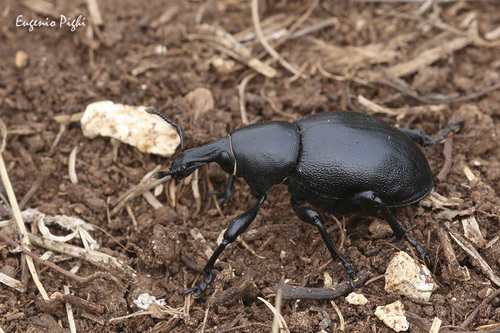
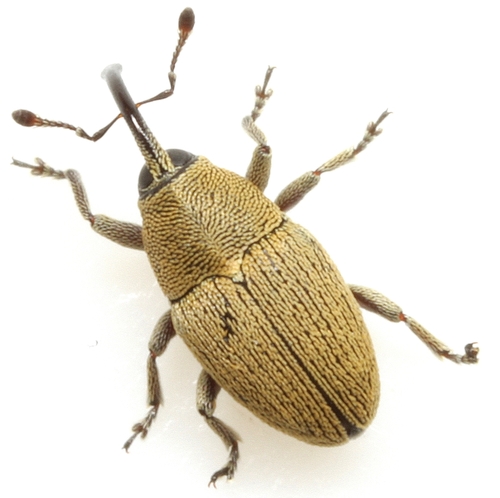
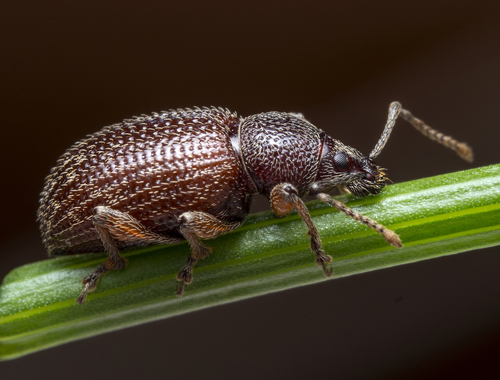
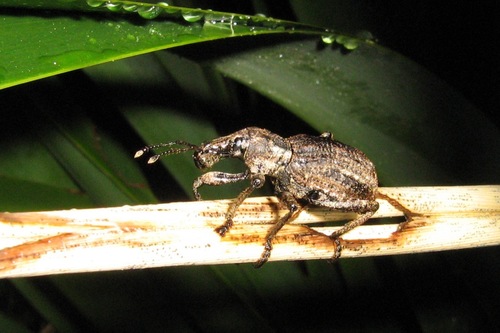
Taxonomy and description. The flax weevil, Anagotus fairburni, was first described by Albert E. Brookes in 1932, from specimens collected in 1931 at its type locality of D'Urville Island in the Marlborough Sounds, sent to Brookes by Ernest Richard Fairburn. The type specimen is held at the New Zealand Arthropod Collection. This species was described as large and robust in form, with adult body length ranging from 20 to 24mm. Adult body colour ranges from coppery-brown to dark brown; older weevils that have lost their scales can appear entirely black. Adults have distinctive pairs of tubercles located halfway along the elytra, and another pair at the base of the elytra. Larvae are large, with a cream-coloured body and a brown head. Adult Anagotus fairburni are flightless. Distribution and habitat. This species has a broad distribution in New Zealand, ranging from the Three Kings Islands north of the North Island to Coal Island in Fiordland off the southern coast of the South Island. Numerous populations are found on islands in the Marlborough Sounds between these two endpoints. On islands, this weevil is most commonly found on New Zealand flax/harakeke (Phormium tenax). It is restricted entirely to rodent-free islands and alpine areas. In the Tararua Range and on islands in Dusky Sound, it lives on mountain flax/wharariki (Phormium colensoi). All stages of the species' life cycle are found on or near flax plants. Life cycle. White eggs are laid at the base of flax plants. Eggs take 3 to 5 weeks to develop into larvae, and darken to black just before larvae emerge. Newly emerged yellow larvae move toward the leaf fan at the base of the flax plant, then tunnel into the plant's soft internal tissue. The duration of the larval and pupal stages is currently unknown. Adult flax weevils have been recorded living for over 12 months in captivity.