About Anacridium aegyptium (Linnaeus, 1764)
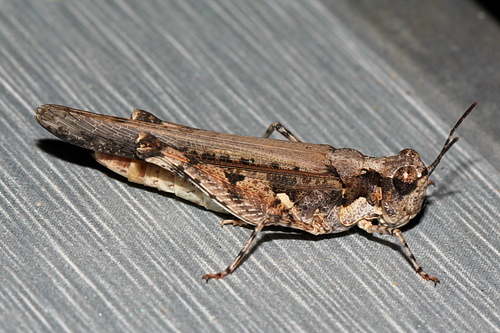
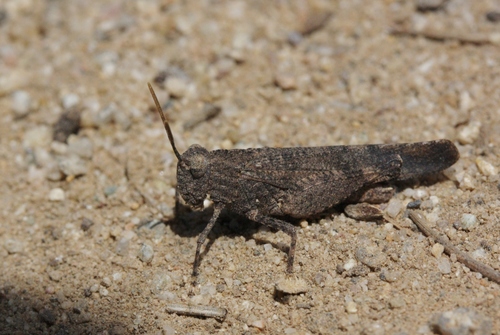
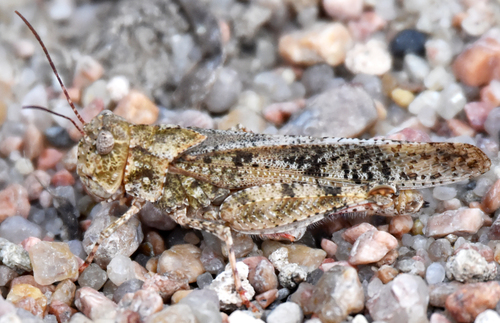
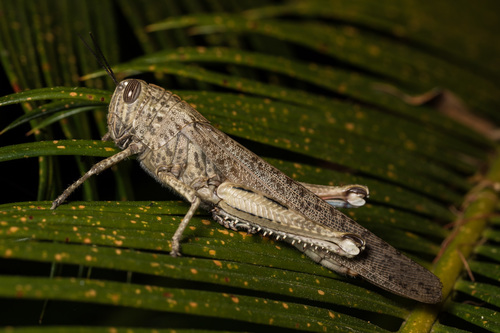
Anacridium aegyptium, commonly called the Egyptian grasshopper, is one of the largest grasshopper species found in Europe. Adult males of this species reach a body length of 30 to 56 mm (1.2 to 2.2 inches), while adult females grow longer, between 46 and 70 mm (1.8 to 2.8 inches). Their bodies are most often gray, brown, or olive in colour. They have relatively short, robust antennae. The hind leg tibiae are blue, and the hind leg femora are orange; the hind femora also bear distinct characteristic dark marks. A key easy-to-spot identifying feature is their eyes, which display vertical black and white stripes. Their pronota have a dorsal orange stripe along with several small white spots, and their wings are transparent with dark markings. This fairly common species occurs across most of Europe, the Afrotropical realm, the eastern Palearctic realm, the Near East, and North Africa, and has recently been recorded in Cape Town, South Africa. Egyptian grasshoppers live in warm, open, bright environments, inhabiting trees and shrubs, scrub land, maquis, and orchards, at elevations ranging from sea level up to 1,500 metres.