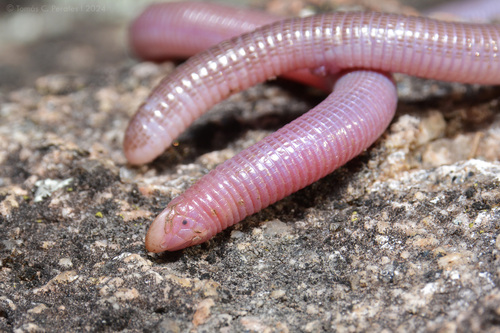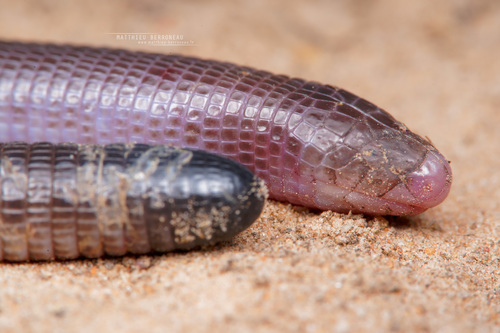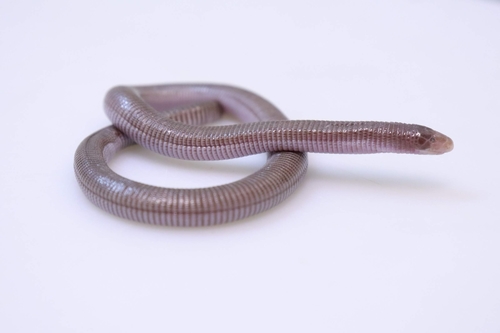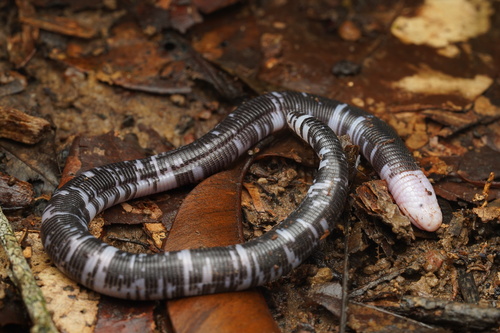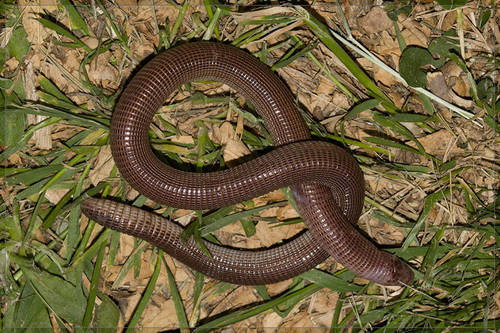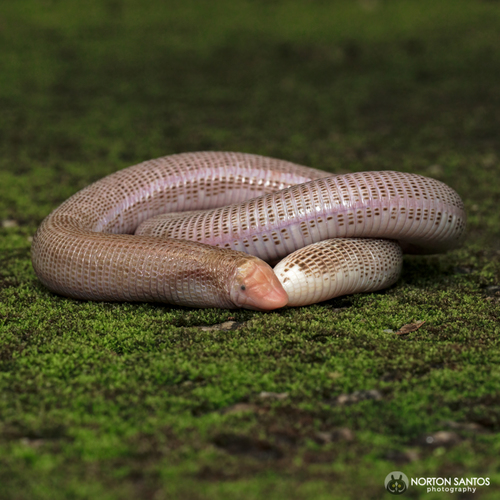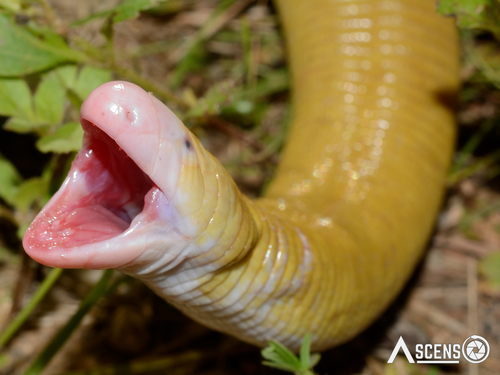
About Amphisbaena alba Linnaeus, 1758
Section Introduction
This section covers characteristics, distribution, and reproductive traits of Amphisbaena alba Linnaeus, 1758, starting with its erythrocyte traits.
Erythroid Cell Development Pattern
The stages of organelle ultrastructural change in developing erythroid cells match what is seen during development in other vertebrate groups.
Hemosome Hemoglobin Arrangement
The most distinct difference found is the periodic transverse alignment of hemoglobin molecules within the organelle matrix of hemosomes.
Hemoglobin Biosynthesis Rate
The transformation of erythroid cell organelles needed for hemoglobin biosynthesis proceeds slowly.
Metabolic Rate Context
This slow transformation is caused by A. alba’s low metabolic rate, which in turn comes from the hypoxic environment that the species inhabits.
Geographic Range
A. alba occurs in South America, with a range extending from eastern Venezuela and the island of Trinidad, through the entire Amazon Basin, to northern Argentina.
Range Size Relative to Congeners
Among all amphisbaenians, Amphisbaena alba has the largest geographic range.
Reproductive Timing
Reproduction in this species takes place during the dry season of its native geographic area.
Nesting Association
Some evidence indicates that this species uses the living space of leaf-cutting ants, and may even lay its eggs inside these ants’ nests.
Clutch Size
Compared to other amphisbaenians, A. alba lays the largest clutch of eggs at one time, between 8 and 16 eggs.
Clutch Size Correlate
This larger clutch size is possibly related to the species’ large body size.
Sexual Dimorphism
A. alba shows no sexual dimorphism in snout-vent length, meristic characters, or morphometric characters.
Dimorphism Absence Cause
This lack of dimorphism is most likely due to functional constraints connected to the species’ burrowing lifestyle.
Spermatozoa Research
The ultrastructure of epididymal spermatozoa has been studied in A. alba.
Mature Spermatozoa Morphology
Mature spermatozoa of the species are filiform, with distinct features including a depression in the transverse section of the acrosome, a moderately long midpiece, columnar mitochondria, an elongated nucleus, and a fibrous sheath within the midpiece.
Cloacal Gland Function
Epidermal glands are located in the cloacal region of A. alba, and these glands are most likely used for reproduction and territory marking.
Gland Secretion Plug
The gland openings are plugged with solid holocrine secretion.
Secretion Deposition Mechanism
This plug is removed as A. alba moves through tunnels, leaving a trail of the secretion behind.