About Amphipyra berbera Rungs, 1949
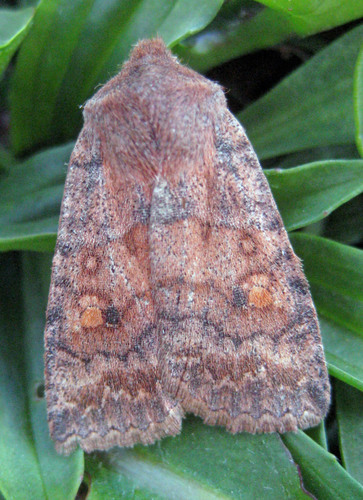
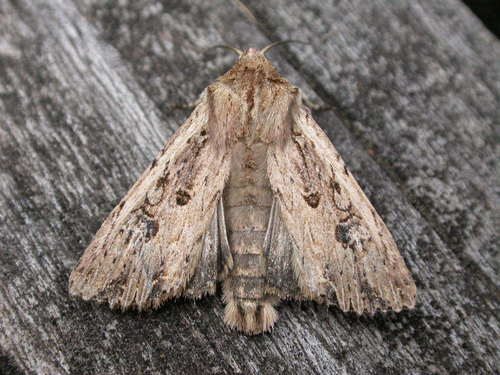
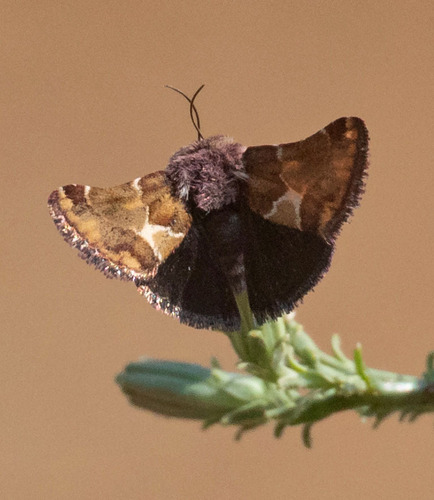
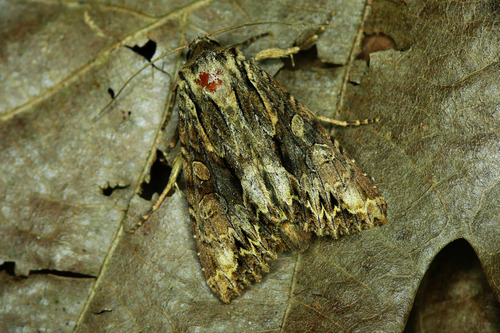
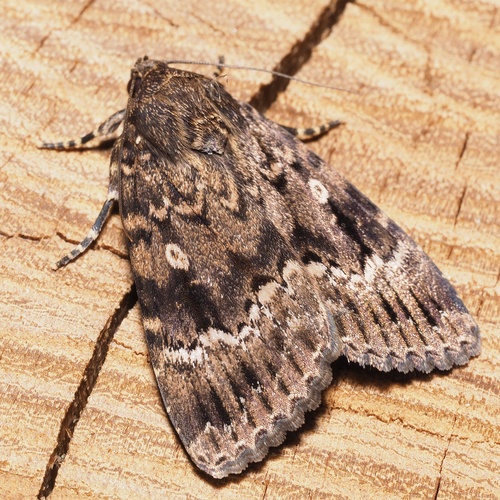
Svensson's copper underwing, scientifically known as Amphipyra berbera, is a moth belonging to the family Noctuidae. This species was first formally described by Charles E. Rungs in 1949. It is distributed across Europe, and its range extends eastward through Russia to the Urals. The wingspan of this moth measures 47 to 56 mm, and females are typically larger than males. Its forewings are brown, marked with pale fascia and a pale stigma that has a dark center. The hindwings are a bright copper colour. Svensson's copper underwing is very similar in appearance to the closely related copper underwing, Amphipyra pyramidea, but the two can usually be distinguished by the pattern on the underside of the hindwings: A. pyramidea has a pale central area that strongly contrasts with darker margins, while A. berbera has a much more uniformly coloured underside. This species flies at night from July to September, and it is attracted to light, with a particularly strong attraction to sugar. The larvae feed on a wide range of trees and shrubs, and the species overwinters in the egg stage. Recorded food plants for A. berbera include Acer (sycamore maple), Carpinus (hornbeam), Populus (aspen), Quercus (oak), Rhododendron, Salix (willow), Sorbus (rowan), Syringa (lilac), Tilia (lime), and Wisteria (Wisteria sinensis).