About Amphipoea oculea Linnaeus, 1761
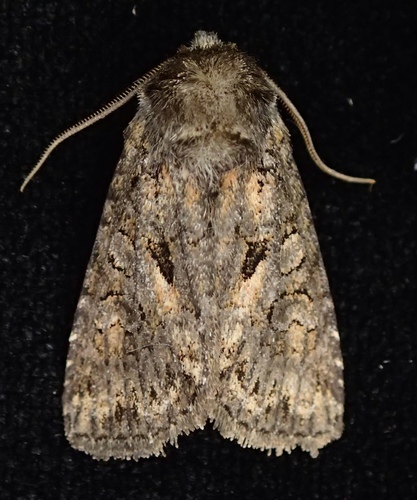
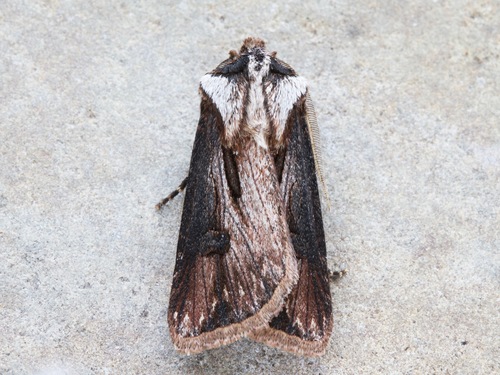
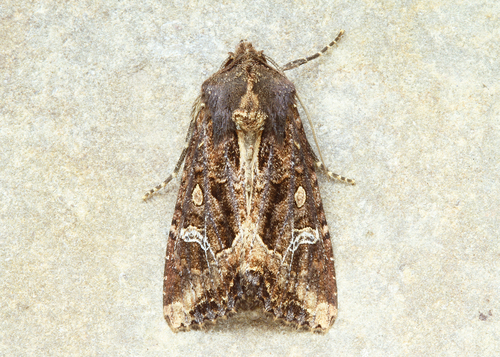
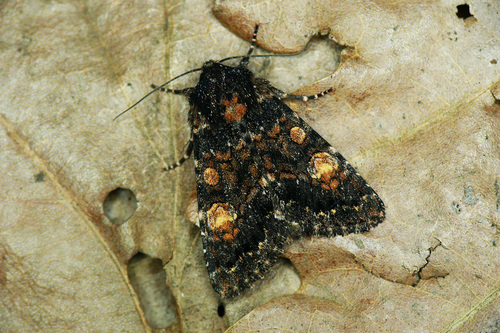
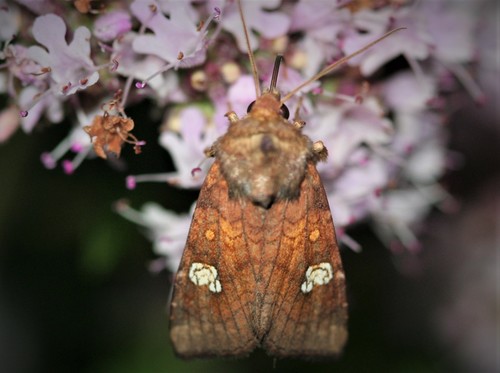
This species, Amphipoea oculea Linnaeus, 1761, has a wingspan of 29–34 mm. Its forewings are pale or dark ferruginous brown, with brown veins. The inner and outer lines on the forewings are double brown and widely spaced. The inner line curves outward between the veins, and is toothed inward on the veins. The outer line has a thin inner arm that is lunulate-dentate, and a thick, continuous, parallel outer arm. A thick dark median shade runs between the two stigmata. The submarginal line is indistinct, waved, and angled on vein 7; above this vein, it is preceded by a dark costal patch. The orbicular stigma is rounded, orange, and marked with a brown ring. The reniform stigma is white, with brown veins crossing it, and contains a brown-outlined lunule on the discocellular, with a yellowish centre; the whole stigma is outlined in brown. The hindwings are fuscous grey, paler toward the base, and the fringe has a rufous tinge. Adult moths are active from June to September, with timing varying by location, and there is one generation per year. At night, adults are attracted to light, and will visit flowers, honeydew, and sugar. During the day, adults feed on the flowers of thistles and ragwort. Larvae feed from April to June on the stems and roots of a variety of grasses and low-growing plants, including butterbur (Petasites hybridus) and tufted hair-grass (Deschampsia cespitosa). This species prefers damp habitats.