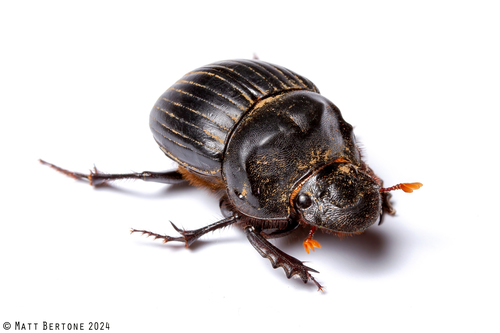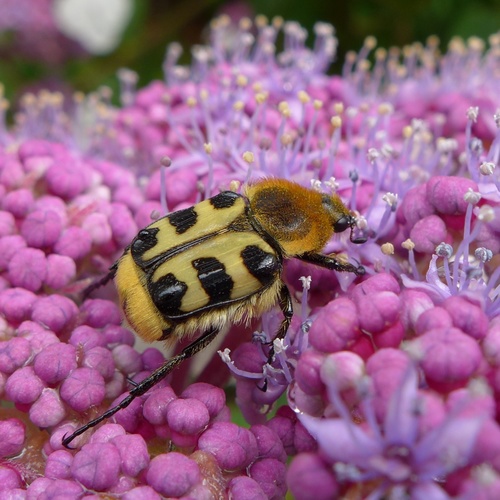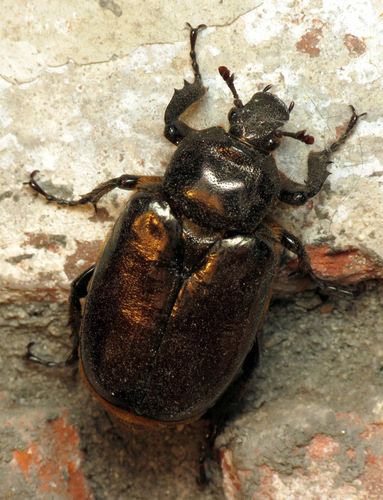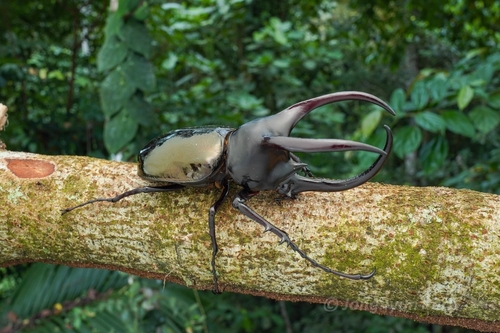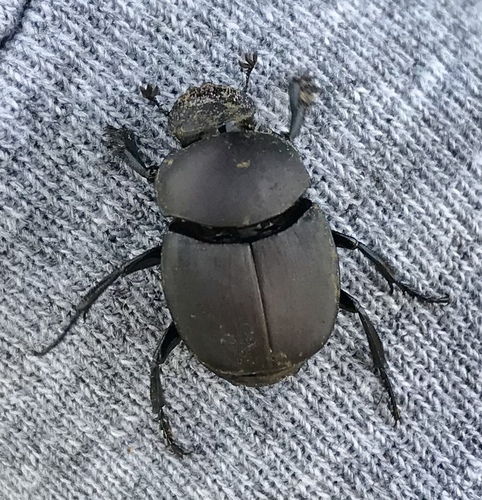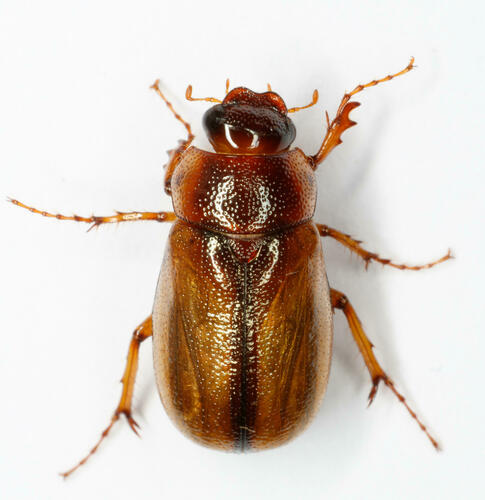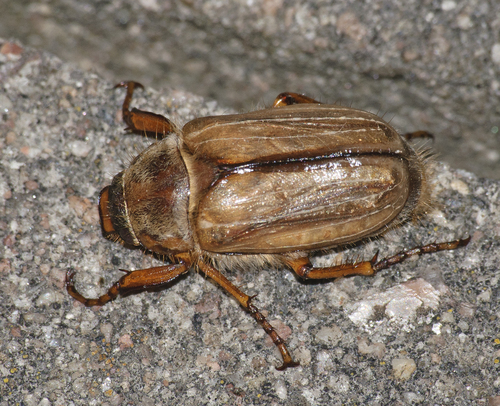
About Amphimallon solstitiale (Linnaeus, 1758)
Amphimallon solstitiale, also called the summer chafer or European june beetle, is a beetle that resembles the cockchafer but is much smaller, reaching approximately 20 millimetres (0.79 in) in length. The species is currently declining in overall numbers, but where it is found, it often occurs in large populations. At dusk, these beetles actively fly around tree tops to search for mates, and they are frequently found drowned in pools of water the following morning. They are attracted to light, and will enter homes through open, lit windows and fly around lamps, creating noticeable noise as they bump into light fixtures. This species lives across the Palearctic region and also occurs in North America, and it is most commonly seen from June to August. It inhabits meadows, hedgerows, and gardens, and feeds on plants and tree foliage. Summer chafer larvae undergo a two to three year development period underground, where they feed on host plants. Carabid beetles, particularly Poecilus cupreus, hunt and eat these larvae, and act as the primary predator of larvae in arable fields. These June beetles are root pests that affect a number of economically important crops, including potatoes, rape, legumes, chestnuts, and turfgrass. As generalist herbivores, they primarily feed on secondary roots, which have lower concentrations of anti-herbivore chemicals across many different plant species. Several chemical and bio-control agents have been developed to manage their populations, including their endemic bacteria and entomopathogenic nematodes. The species is distributed throughout Europe, extending into Turkey and parts of East Asia. Multiple other Amphimallon species, including A. ochraceum and A. irtishensis, have been reclassified as synonymized subspecies of A. solstitiale.