About Amorphophallus paeoniifolius (Dennst.) Nicolson
Species Classification
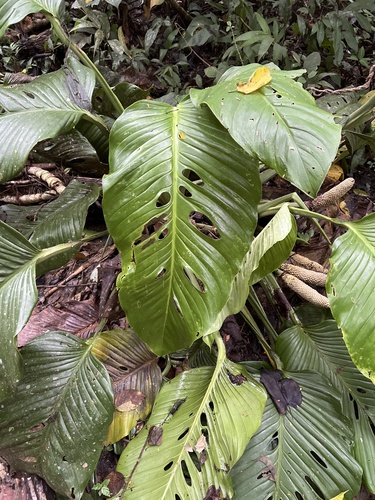
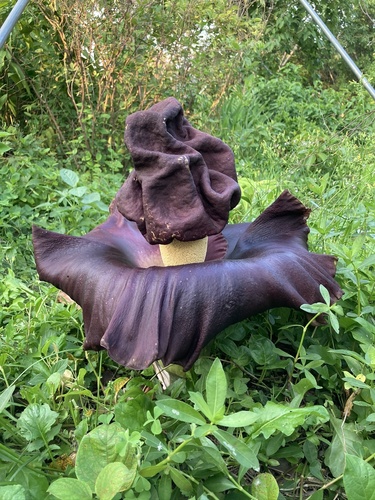
Amorphophallus paeoniifolius is a large tuberous herb.
Leaf Phase Height
When it is in its leaf phase, it can reach up to 2 m (6 ft 7 in) in height.
Tuber Dimensions
Its tuber may grow up to 30 cm (12 in) wide, 20 cm (7.9 in) high, and can weigh as much as 15 kg (33 lb).
General Edibility
This species is commonly consumed as food across South Asia.
Common Name (West Bengal, Assam, Bangladesh)
In the Indian states of West Bengal, Assam, and the neighboring country of Bangladesh, it is called ol (ওল/ওল কচু).
Ol Preparation Methods
It is most commonly eaten mashed, fried, or added to curries; more rarely, it is used to make pickles or ol chips.
Young Vegetable Consumption
In some households, the young green leaves and stems are also cooked and eaten as green vegetables.
Common Name (Maharashtra, Uttar Pradesh, Gujarat)
In the Indian states of Maharashtra, Uttar Pradesh, and Gujarat, this plant is called suran.
Bihar Preparation Dishes
In the Indian state of Bihar, it is used to prepare oal curry (elephant foot curry), oal bharta or chokha, pickles, and chutney.
Barabar Chutney Etymology
Oal chutney is also called barabar chutney, because it includes equal portions of mango, ginger, and oal; the word barabar means "in equal amount", which gives the chutney its name.
Common Name (Chhattisgarh)
In the Indian state of Chhattisgarh, this plant is called zimmikanda or zaminkand, and it is eaten prepared as a curry, where it is considered a local delicacy.
Common Name (Tripura)
In the Indian state of Tripura, it is called batema.
Batema Raphide Removal Process
It is prepared by mixing it into a paste with baking soda (sodium bicarbonate) and water to remove its raphides, which are sharp calcium oxalate needles.
Batema Bun Preparation Step 1
This paste is shaped into buns, which are boiled in water that also contains baking soda; after boiling, the water is discarded.
Batema Bun Preparation Step 2
The cooked buns are then cut into pieces and mixed with fresh garlic paste and mosdeng, a spicy paste made from dried fish or shrimp and chili.
Tripura Leaf and Stem Consumption
The leaves and stems of the plant are also eaten, after being chopped into pieces and fried.
Common Name (Karnataka)
In the Indian state of Karnataka, it is called suvarnagadde.
Common Name (Kerala)
In South India, particularly the state of Kerala, it is known as chena (ചേന), and its tuber has been part of local diets for centuries.
Tamil Common Names
In the Tamil language, it is called kaaraa karanai kizangu (காறாக்கரணைக் கிழங்கு) or chénaikkizangu (சேனைக்கிழங்கு).
Kerala Preparation Methods
In Kerala, it is mainly served as steamed pieces called പുഴുക്ക് (puzhukk) alongside a traditional chutney made from green chili, coconut oil, shallots, and garlic, though it is also commonly prepared as a curry to serve as a side dish with rice.
Tamil Nadu Preparation
In Tamil Nadu, it is made into a thick chutney called masiyal (மசியல்), which is typically eaten as an accompaniment to rice dishes.
Telugu Common Name
In Telugu-speaking regions, the tuber is called Kanda Gadda (కంద గడ్డ) and is popular across Telugu-speaking states.
Telugu Region Festive Stew
Here, it is cooked with Indian spinach leaves, tamarind pulp, and spices to make a vegan stew, which is specifically served during devotional feasts and auspicious celebrations including housewarmings and baby showers.
Telugu Region Fried Snack Preparation
It can also be cut into thin slices or strips and fried as a snack, similar to potato fries.
Historical Famine Food Role
For many centuries, this tuber has served as a main source of carbohydrates for people in the region, particularly during past periods of famine, alongside the more commonly popular tapioca.
Flower Bud Edibility
Before the flower bud opens, it is also used to make curry, and all parts of the flower can be used to prepare different types of side dishes.
Nepal Common Name and Cultivation
In Nepal, this plant is called oal, kaan, or suran, and it is grown mainly in the southern plains of Nepal.
Nepal Festival Consumption
Its curry is eaten during the Jitiya and Deepawali festivals.
Batek People Preparation Method
It is a traditional food of the Batek people who live on the east coast of the Malay Peninsula; these communities cook the tubers (called ubi hakay by the group) by boiling them inside bamboo.
Philippines Common Name
In the Philippines, this plant is known as pongapong.
Philippines Consumption Methods
Its young leaves, stems, and corms are eaten as vegetables or made into desserts, and they are always thoroughly cooked to break down the stinging oxalate crystals they contain.
Medicinal System Use
Amorphophallus paeoniifolius, commonly called elephant-foot yam, is widely used in Indian medicine, and it is recommended as a remedy across all three major Indian medicinal systems: Ayurveda, Siddha, and Unani.
Medicinal Applications
In these systems, the corm is prescribed to treat a range of different ailments, and the tuber is reported to be useful specifically for the treatment of piles.
Cultivation Disease Susceptibility
During cultivation, A. paeoniifolius is susceptible to infection with Dasheen mosaic virus.