About Ammospermophilus interpres (Merriam, 1890)
Adult Size
Adult Ammospermophilus interpres measure between 220 and 235 millimetres (8.7–9.3 in) in length, and weigh between 99 and 112 grams (0.218–0.247 lb).
Body Markings
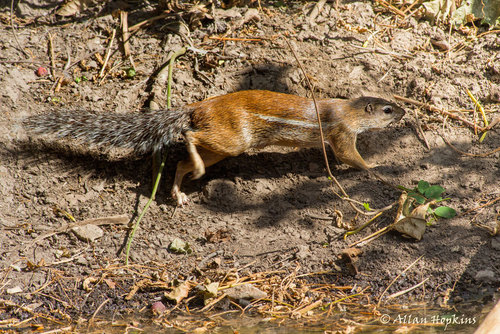
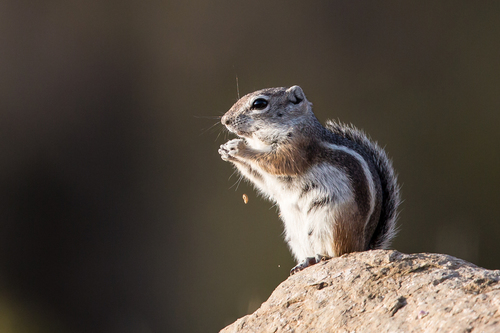
They have a white stripe running along the side of their torso, with black markings above and below the stripe that make the stripe stand out.
Fur Coloration
The rest of their fur is grey with either black or brown markings; only the underside of the tail is also white.
Annual Activity Pattern
This species is active year-round and does not hibernate.
Evolutionary Timeline
It is thought to have evolved into its current form by the Clarendonian geologic period, which spans from 13.6 to 10.3 million years ago.
Breeding Season
The breeding season starts in February, and each adult produces one to two litters per year, with between five and fourteen young per litter.
Juvenile Development
Young A. interpres stay in the nest until they are about one-quarter of their full adult size, which lines up with when they transition to eating solid food.
General Diet
Their diet consists of insects, seeds, and berries, including the fruit and seeds of many different cactus species.
Diet Observation
One adult specimen collected in 1905 had eaten enough fruit from Opuntia engelmannii that its flesh turned purple.
Nesting Habitat
A. interpres builds nests in burrows or rock crevices, usually located near bushes or shrubs.
United States Distribution
Within the United States, this species occurs in western Texas and parts of south-central New Mexico.
Mexico Distribution
It is also found in northern Mexico, including the Chihuahuan Desert.
IUCN Conservation Status
Due to its broad habitat range, A. interpres is classified as Least Concern on the IUCN Red List.
Population Abundance
While it only occurs in isolated pockets in the United States, the species is common across its entire range within Mexico.
Human-Caused Threats
The main human-caused threat to this species is accidental trapping or poisoning in the United States, though it is hunted for food in some parts of Mexico.