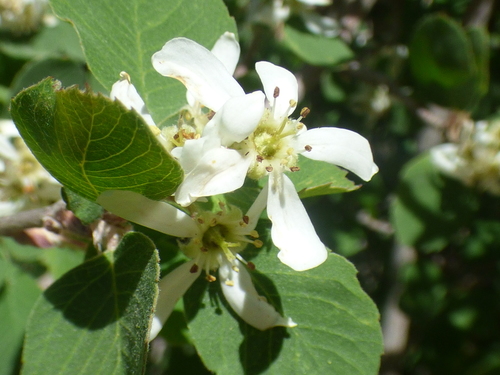
About Amelanchier utahensis Koehne
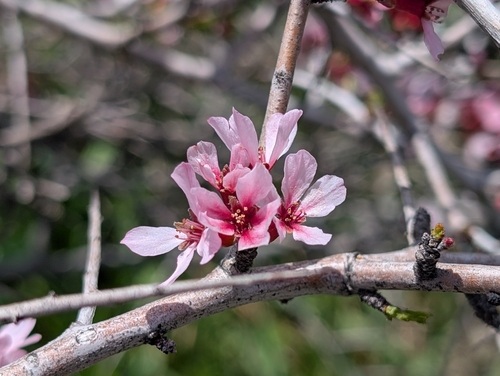
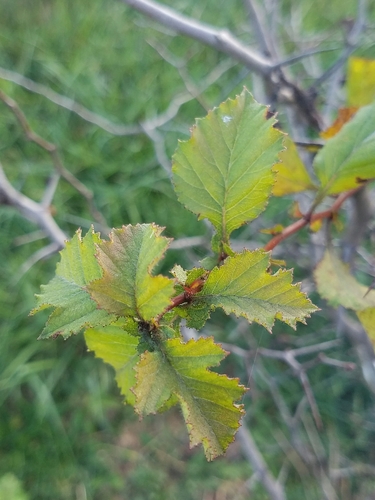
Amelanchier utahensis is a spreading deciduous plant that grows to a maximum height of 3.2 meters (10 feet). It produces green, rounded or spade-shaped leaves that are commonly toothed, measure 1 to 2.5 centimeters (1⁄2 to 1 inch) long, and drop from the plant in autumn. In mid-spring, this shrub produces short inflorescences of white flowers; each flower has five narrow, widely spaced petals that are 1 centimeter long. Its fruits are purplish pomes that measure 1 centimeter long. The core mountainous range of this species is bounded in the east by the Rocky Mountains of Colorado, New Mexico, and Wyoming, in the west by the Front ranges of Utah, and in the south by the Mogollon Rim and White Mountains region of central-east Arizona and western New Mexico. The remainder of its range is centered on the mountain ranges of the Great Basin, extending west to the Sierra Nevada and California's chaparral and woodlands, as far south as extreme northern Baja California, and north to Oregon, Washington, Idaho, and southwestern Montana. It grows in a variety of habitats, from scrubby open slopes to woodlands and forests. Utah serviceberry is generally fire tolerant, and sprouts from the root crown if damaged by fire. It also has high drought resistance, produces abundant fruit, is not susceptible to frost, and is browsed by desert bighorns, elk, mule deer, many birds, and domesticated livestock. Its berries are edible but have a bland, insipid flavor.