About Ambrosia ambrosioides (Cav.) W.W.Payne
Nomenclature and Common Names
Ambrosia ambrosioides (Cav.) W.W.Payne, commonly called canyon ragweed or chicura, is a species of ragweed that grows in the deserts of northern Mexico (including Baja California, Baja California Sur, Chihuahua, Durango, and Sonora), as well as in the U.S. states of Arizona and California, specifically Ventura County and San Diego County.
Growth Form and Height
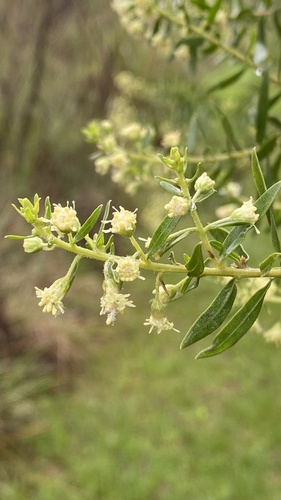
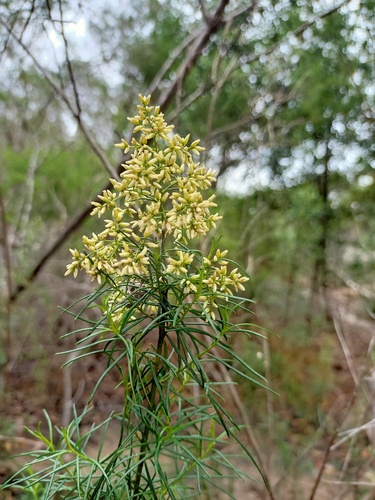
It grows as a shrub reaching 1 to 2 meters in height.
Leaf Morphology
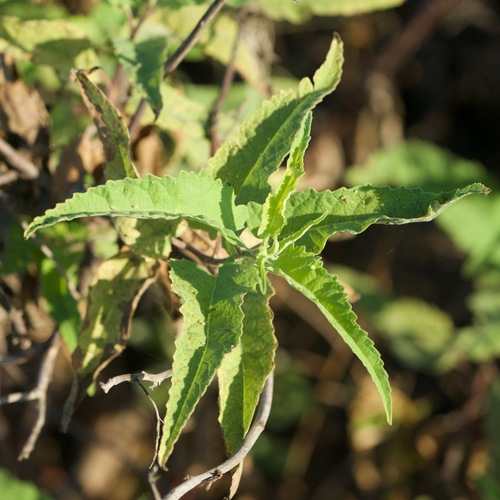
Its leaves are elongate with coarse teeth, measuring between 4 and 18 centimeters long and 1.5 to 4 centimeters wide.
Reproductive System and Inflorescence
It is monoecious, producing staminate flower heads in both terminal and axillary racemes that grow positioned above the pistillate flower heads.
Flowering Period
Most flowering occurs between February and April.
Fruit Characteristics
Its fruits are burs 10 to 15 millimeters in length, covered in hooked spines.
Similar Species Distinction
This species has a somewhat similar appearance to Ambrosia ilicifolia, but A. ilicifolia differs by having sessile leaves with a reticulate vein pattern, and marginal teeth that develop into short spines.
Habitat
This ragweed grows in sandy washes, other disturbed areas such as roadsides, and is sometimes found growing in rock crevices.
Human Uses
The Seri people smoked its dried leaves, and used its roots to make medicinal teas and pigments.