About Amaurornis flavirostra (Swainson, 1837)
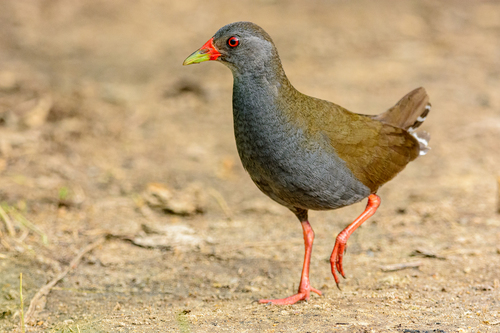
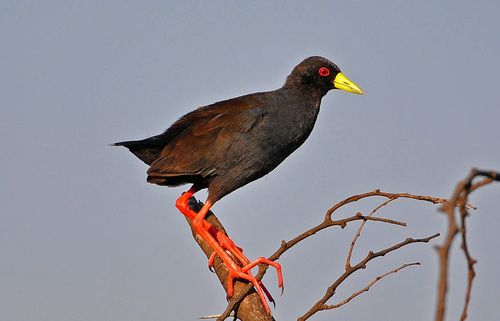
Amaurornis flavirostra, commonly known as the black crake, was first described by Swainson in 1837. Adult black crakes measure 19–23 cm (7.5–9.1 in) in length, with short tails and long toes. As the common name suggests, adult birds have mostly black plumage, with a brown-olive tone on the wings and upperparts that can rarely be distinguished when observing the bird in the field. Adults have red eyes, a yellow bill (the source of the species epithet flavirostra), and red legs and feet that become duller in color outside the breeding season. The plumage of male and female black crakes is similar, though males are slightly larger on average. Most males have a hooked upper mandible, while only 10% of females have this feature. Immature black crakes have brown upperparts, and dark grey heads and underparts. Their bills are greenish yellow, and their legs and feet are dull red. Like all rails, downy black crake chicks are covered in black down. The species' primary call is a duet between two birds: it begins with a throaty, chattering krrrok-kraaaa, answered by a dove-like cooing coo-crr-COO. The black crake is a common to abundant species that lives in all types of freshwater marshes, as long as the habitat contains some vegetation for cover. Unlike many other rail species that are highly secretive, black crakes are often seen active out in the open. The species has gained population benefit from human deforestation activity, and it is rarely hunted because its flesh is not palatable.