About Amaranthus retroflexus L.
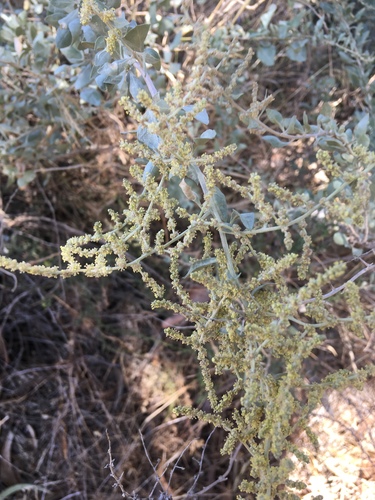
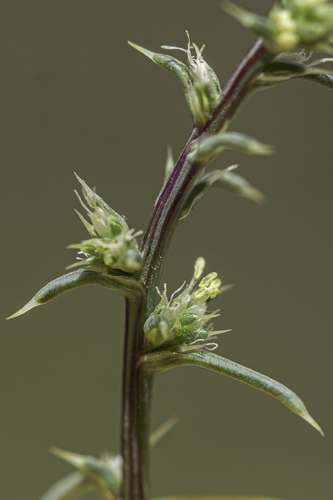
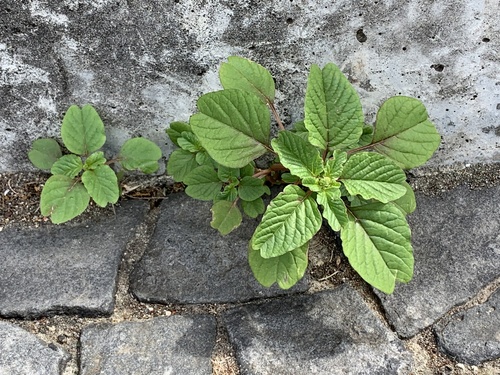
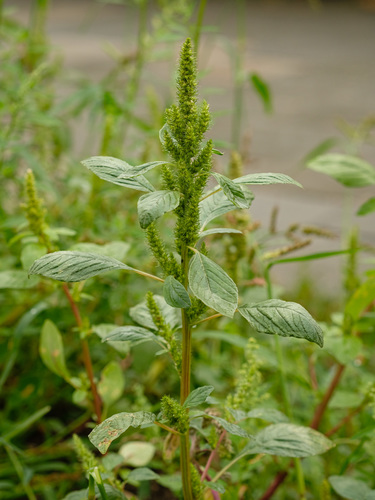
Amaranthus retroflexus L. is an erect annual herb that grows up to 1 meter (3+1⁄2 feet) tall, and as one of its common names suggests, it forms a tumbleweed. In large individuals, leaves can reach nearly 15 centimeters (6 inches) long. Leaves positioned higher on the stem are lance-shaped, while lower leaves are diamond or oval shaped. This species is monoecious, meaning individual plants bear both male and female flowers. Its inflorescence is a large, dense cluster of flowers mixed with spiny green bracts. It produces a capsule fruit less than 2 millimeters (1⁄16 inch) long; the capsule has a lid that opens to release a tiny black seed. Its native range is uncertain: it may be native to the Neotropics, or to Central and Eastern North America. It is now a widespread introduced species across most continents, growing in a wide variety of habitats. One of its common names is "pigweed", which comes from its habit of growing in pastures where hogs are fed. No species in the genus Amaranthus is known to be poisonous to humans, but the leaves of Amaranthus retroflexus contain oxalic acid, and may also contain nitrates when grown in nitrate-rich soils. Like many other Amaranthus species, this plant can be harmful or even deadly if fed in large quantities to cattle and pigs over several days. Fatal nephrotoxicity caused by such forage is thought to come from the plant's high oxalate content. Other symptoms, including bloat and methylglobineamia in the most severe cases, are likely linked to the plant's high nitrate content.