About Amanita xylinivolva Tulloss, Ovrebo & Halling
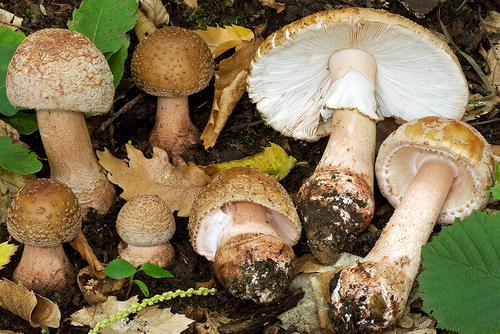
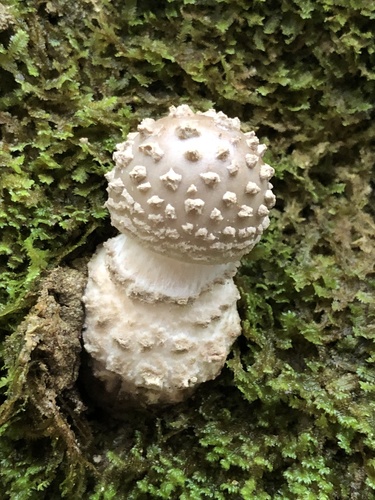
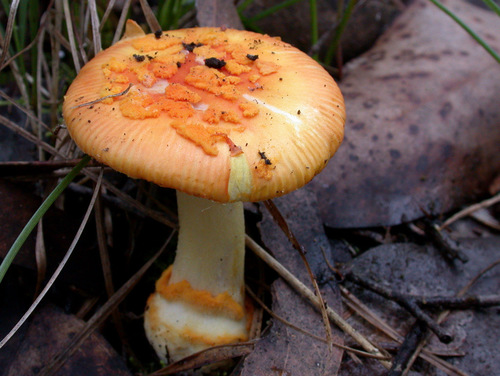
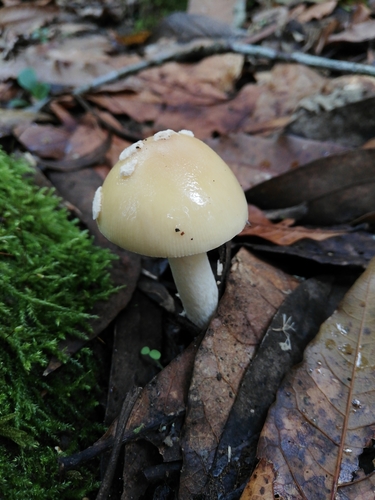
Amanita xylinivolva is a small to medium-sized mushroom with a yellow, yellowish cream, or buff-colored cap. The cap margin has sulcate to tuberculate-sulcate striations. Fragments of the cottony, pale universal veil may be present on the cap surface, or at the junction where the stipe meets its swollen bulb. This species was first collected in 1978 by Guzmán and Carela, who originally identified it as a member of the Amanita gemmata group. It can be told apart from A. gemmata by its predominantly subglobose spores. Amanita xylinivolva was first discovered growing in the Andes of Colombia, in association with Quercus humboldtii and Weinmannia tomentosa. Some sources report it also grows in Guatemala, but the full geographic range of the species is currently unknown. Biochemical analysis of Colombian specimens of A. xylinivolva has found that it contains the potent toxin α-amanitin. Concentrations of the toxin range from approximately 50 to 6000 ppm, and α-amanitin has been detected in both the caps and stipes of the mushroom. Fungal databases list this species as being used as a poison. Consumption of mushrooms that contain α-amanitin can cause severe liver and renal failure, which is sometimes fatal.