About Amanita wellsii (Murrill) Murrill
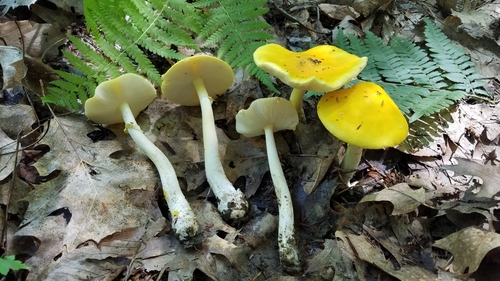
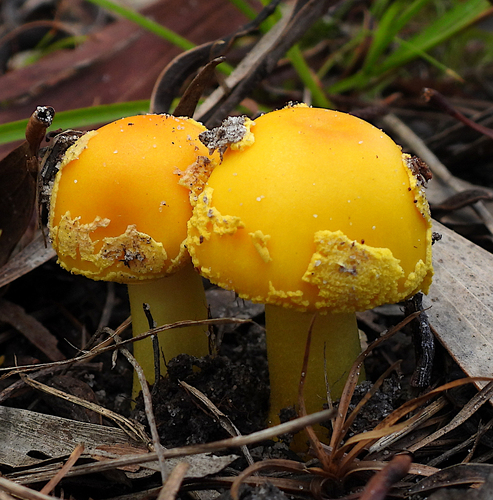
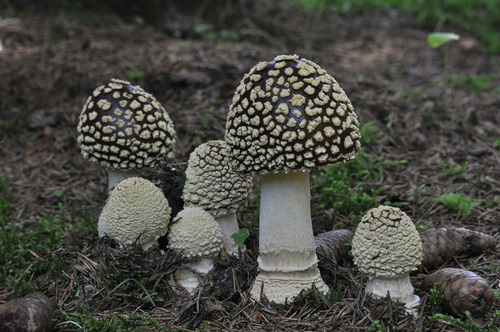
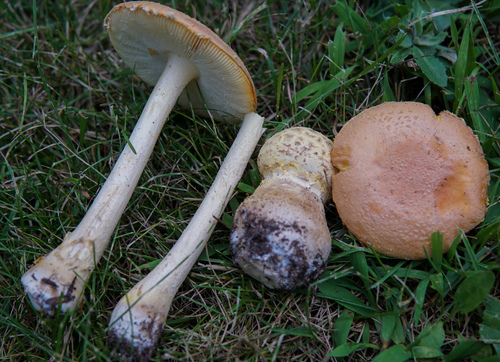
Amanita wellsii, commonly known as the salmon amanita, is a species of agaric fungus in the family Amanitaceae. American mycologist William Alphonso Murrill officially described this species in 1920, working from collections he made in Springfield, New Hampshire in 1917. The specific epithet wellsii honors Professor H. L. Wells, who had studied the species before Murrill's formal description. This fungus occurs in North America; its distribution stretches from the Appalachian Mountains in North Carolina northward to the northern edge of alder's range in Canada. The fruit bodies of Amanita wellsii grow scattered or in groups on the ground in mixed forests. The edibility of this species is unknown.