About Amanita strobiliformis (Paulet ex Vittad.) Bertill.
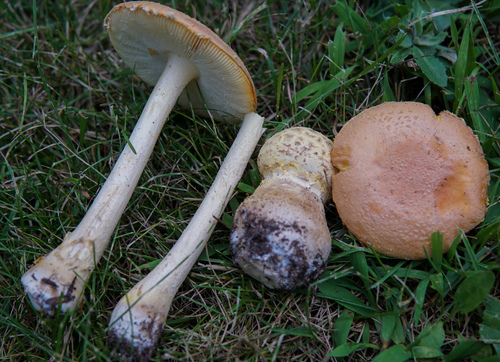
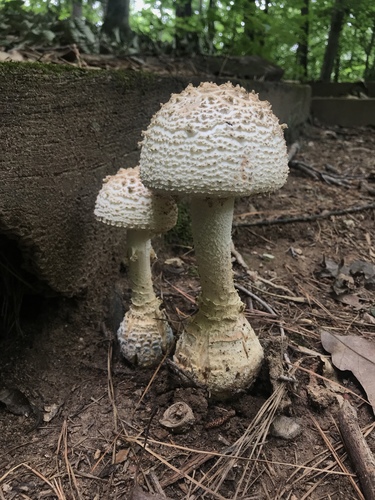
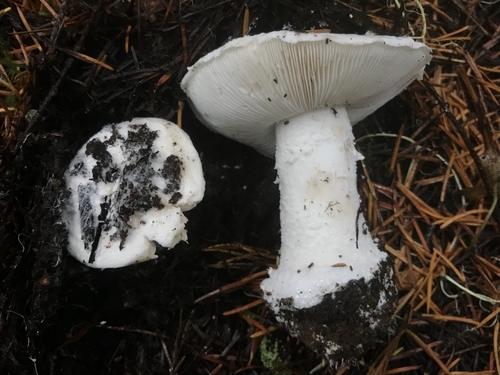
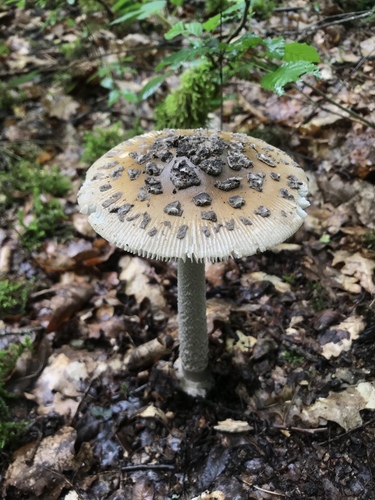
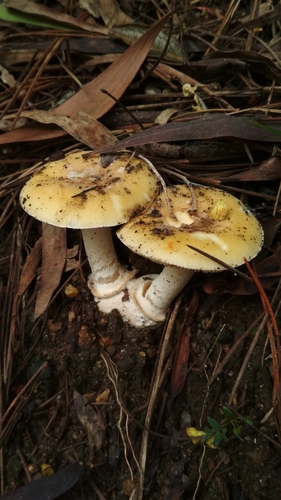
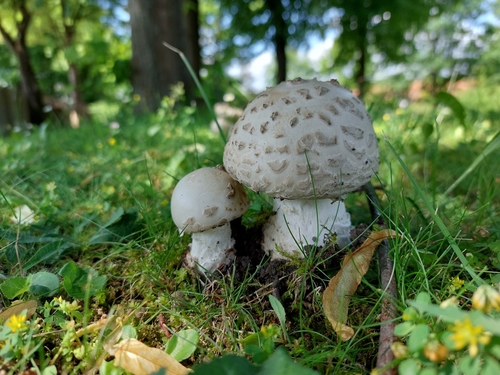
This fungus has the scientific name Amanita strobiliformis (Paulet ex Vittad.) Bertill. The cap measures 7.5 to 25.5 centimetres (3 to 10 inches) across, has a rough surface covered in warts that sometimes fall off to leave the cap smooth, is whitish in overall colour, and sometimes has patches of brown. Its gills are free from the stem and rounded at their inner end near the stem. The partial veil is large, and sometimes adheres to the edge of the cap. The stipe (stem) is 7.5 to 20 cm (3 to 8 in) long, thick, white, bulbous at the base, and can sometimes weigh as much as one pound. Its spores are elliptical in shape. In Europe, Amanita strobiliformis grows from the Mediterranean region north to the Netherlands and England, and may occur even further north. It forms mycorrhizal associations with deciduous trees, and prefers scattered forest or woodland edge habitats, usually growing on alkaline soil. It fruits either singly or in clusters, and the species is rare. Its edibility is currently unknown. The genus Amanita contains some of the most toxic known fungi: some species are deadly even in very small doses, while others are relatively harmless and sometimes considered edible, with Amanita caesarea specifically regarded as a delicacy.