About Amanita pachycolea D.E.Stuntz
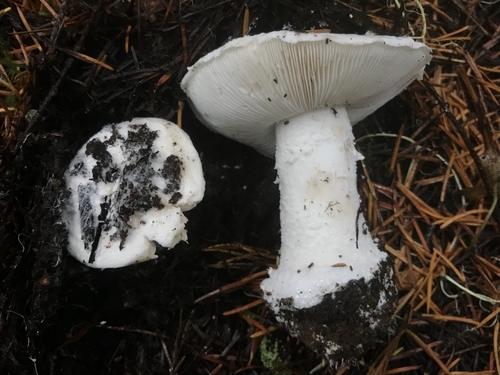
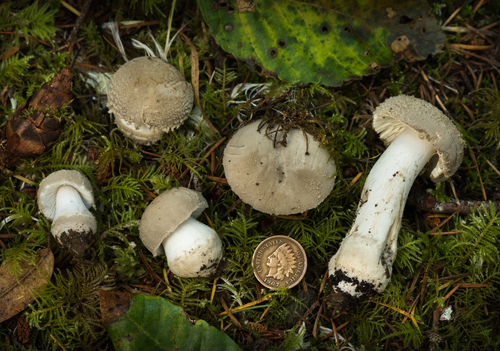
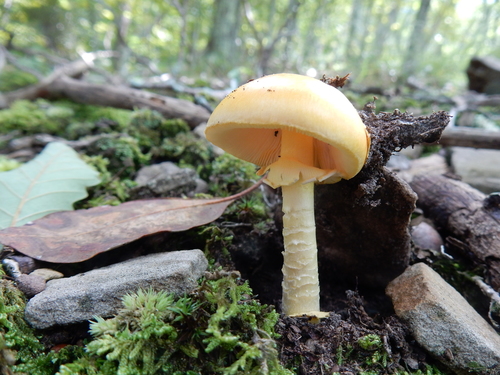
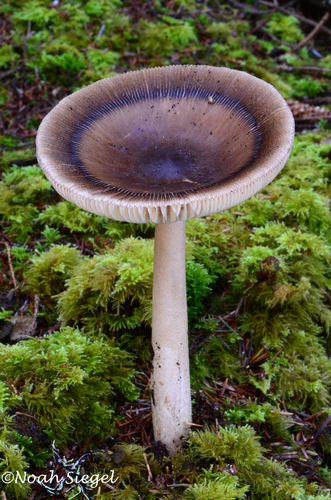
Amanita pachycolea, commonly known as the western grisette or Stuntz's great ringless amanita, is an agaric fungus species belonging to the family Amanitaceae. Its cap is brown, sometimes appearing lighter near the margin. The gills are white with gray-brown edges, and they stain orange-brown as they age. The stipe ranges from white to brownish, with a fibrillose or scaly surface. The stipe base is enclosed by a thick, felty volva; this volva is white when young, then becomes yellow or brownish, and sometimes turns reddish with age. Mycologist Daniel Elliot Stuntz first recognized A. pachycolea as a distinct species, and the species was formally published in 1982 by Harry Delbert Thiers. This species is classified in Amanita section Vaginatae, a group that includes species with conspicuous radial striations on the cap, inamyloid spores, and no ring on the stipe. For A. pachycolea specifically, the cap is 8–20 centimetres (3–8 inches) wide, and the stipe is 10–25 cm long, 1–3 cm wide, and tapers upward. This fungus is found in western North America, where it grows in association with conifers in both coniferous and mixed forests. The mushroom is edible, but it is not considered choice and is not recommended for eating, as it can be confused with toxic Amanita species.