About Alypiodes bimaculata Herrich-Schäffer, 1853
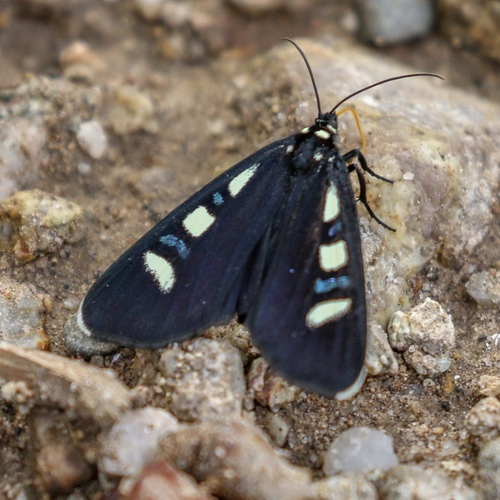
This species, commonly called the two-spotted forester moth, actually has more than two spots in total. The name refers to the one small spot found on each of its two hindwings; the count only matches the name if you ignore all additional spots on its forewings and body. For identification, you can look for key features: blue dashes between its white spots, rounded wings, a broad thorax, and the unusual trait of being a day-flying moth, unlike most moths which fly at night. Adult moths are often observed feeding on nectar from flowers of Baccharis plants, which belong to the Asteraceae family. Caterpillars of this species feed on plants in the Nyctaginaceae, the four o'clock family. Based on the distribution map of Alypiodes bimaculata hosted on iNaturalist, this species occurs in the highlands of northern and central Mexico, excluding Baja California, and in areas of the United States near the Mexican border, primarily in Arizona. The texasento.net website also records this species from western Texas.