About Althaea cannabina L.
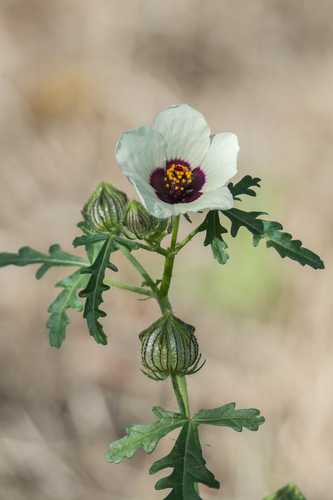
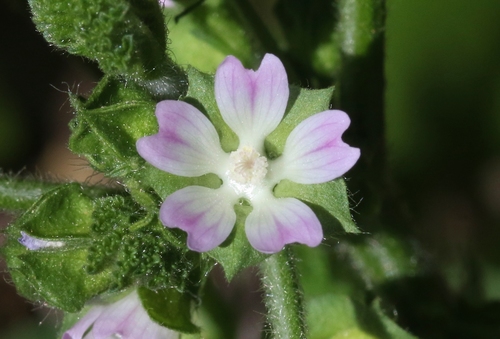
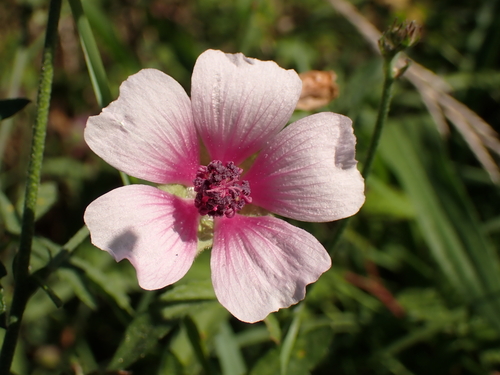
Althaea cannabina L. typically grows to an average height of 40 to 200 centimetres (16 to 79 inches). Its stem is erect, cylindrical, covered in fine hairs, and heavily branched. Lower leaves are stalked, hairy, and almost entirely divided into three to five linear or linear-lanceolate segments that are toothed or lobed, reaching up to 2 centimetres (0.79 inches) wide and 8 centimetres (3.1 inches) long. Upper leaves are simply lobed and toothed. Flowers grow either singly or in clusters in the leaf axils, borne on long pedicels up to 10 centimetres (3.9 inches) long or long peduncles up to 20 centimetres (7.9 inches) long. Flowers are usually pink or reddish-purple, heart-shaped, 8 to 10 millimetres (0.31 to 0.39 inches) wide and 13 to 15 millimetres (0.51 to 0.59 inches) long, with purple-red stamens. Its flowering period runs from July to September. Althaea cannabina grows wild across central and southern Europe, the Mediterranean Basin (extending from Portugal and North Africa east to Turkey, excluding the Balearic Islands, Corsica, Crete, and Cyprus), and on into central Asia. These plants grow at altitudes ranging from 0 to 800 metres (0 to 2,625 feet) above sea level. They favor coastal thickets, forest edges, meadows, weedy areas, roadsides, wasteland, pastures, and parks, and particularly thrive in rocky and calcareous soils.