About Alternanthera sessilis (L.) R.Br. ex DC.
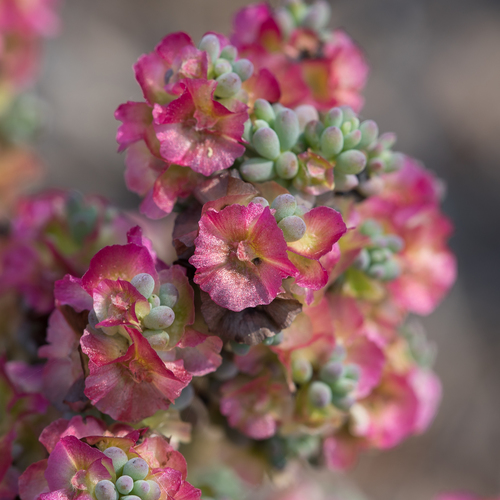
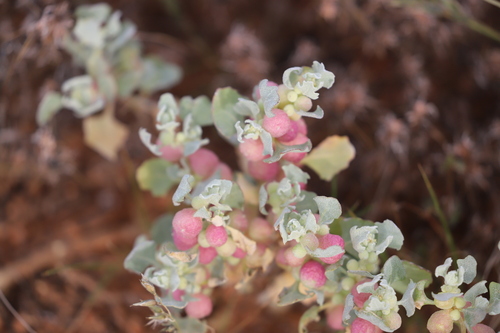
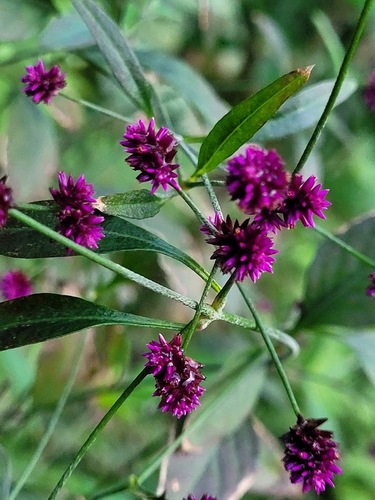
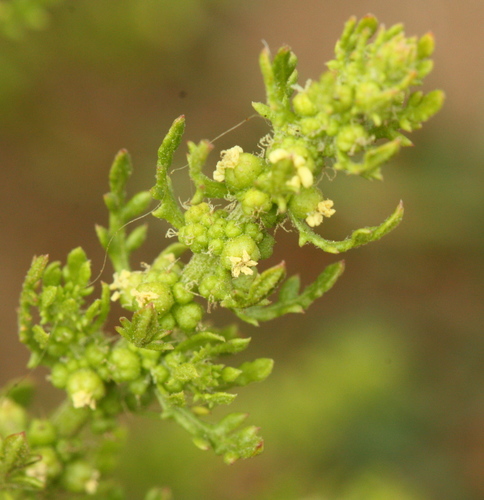
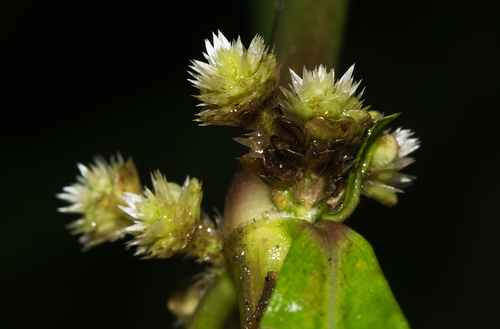
Alternanthera sessilis (L.) R.Br. ex DC. is a perennial herb with prostrate stems that are rarely ascending, and often root at the nodes. Its leaves range from obovate to broadly elliptic, occasionally linear-lanceolate, 1–15 cm long, 0.3–3 cm wide, and are glabrous to sparsely villous, with petioles 1–5 mm long. Its flowers grow in sessile spikes; the bracts and bracteoles are shiny white, 0.7–1.5 mm long, and glabrous. The sepals are equal, 2.5–3 mm long, with the outer sepals having 1 nerve or an indistinct 3 nerves toward the base. It has 5 stamens, 2 of which are sterile. In the wild, this species flowers from December until March.
This plant occurs throughout the tropical and subtropical regions of the Old World. It has been introduced to the southern United States, and its native origins in Central and South America are uncertain. It is classified as a weed in parts of the southern United States. It is usually found in wet or damp spots, though this is not always the case; in areas of high humidity, it can even grow as a garden weed.
This species grows wild, but is also cultivated for food, herbal medicine, and as an ornamental plant. The aquarium plant Alternanthera reineckii is sometimes misidentified as A. sessilis. In certain regions of South East Asia, its leaves and young shoots are consumed as vegetables. In South Asia, its leaves, flowers and tender stems are consumed as vegetables. The plants are finely shredded and stir fried with grated coconut and spices to make a salad-like dish, which is most commonly eaten as an accompaniment to rice.
Its leaves are crunchy, slightly more so than temperate climate spinach, and not slimy. Some cultivars have a slight bitter taste. When eaten in large quantities, the plant requires steaming or boiling because it contains oxalates. It can be eaten alone as a green vegetable, or added to other dishes as a spinach substitute. Reportedly, Brazilians usually eat it raw in salads with oil and/or vinegar, tomato, and onion, though academic literature recommends cooking it. This vegetable can be added to quiches, pies, curries, dals, pasta sauces, or lasagna, or added to dishes and stir-fries late in the cooking process as a spinach substitute to add a nutty flavour.
As a herbal medicine, this plant has diuretic, cooling, tonic and laxative properties. It has been used to treat dysuria and haemorrhoids. The plant is also believed to be beneficial for the eyes, and is used as an ingredient in making medicinal hair oils and kajal.