About Alopecosa kochi (Keyserling, 1877)
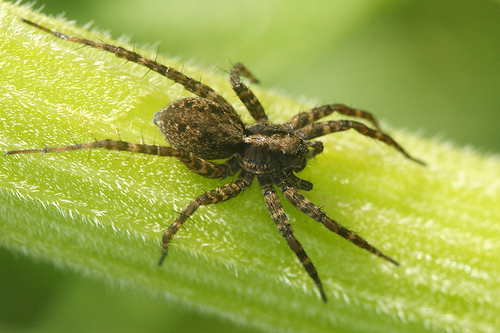
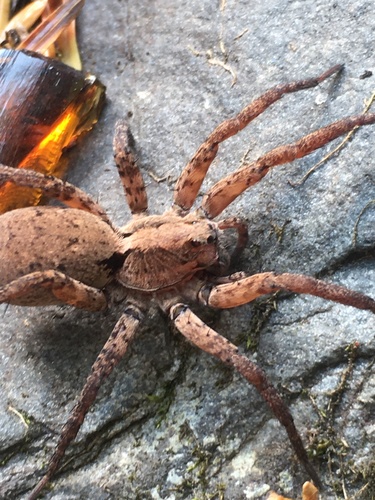
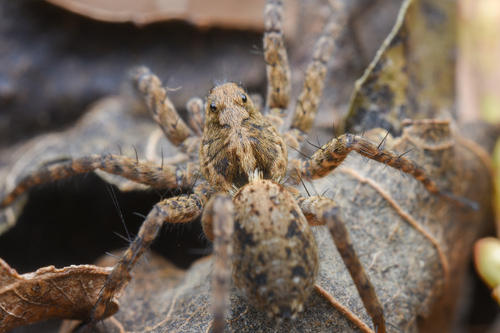
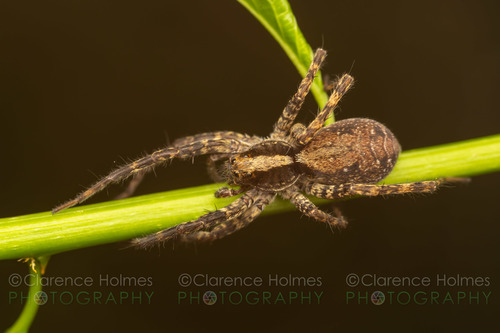
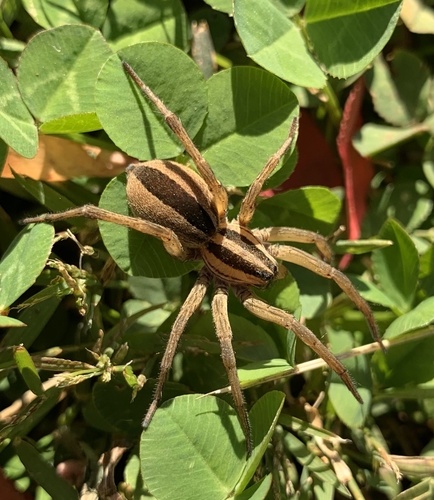
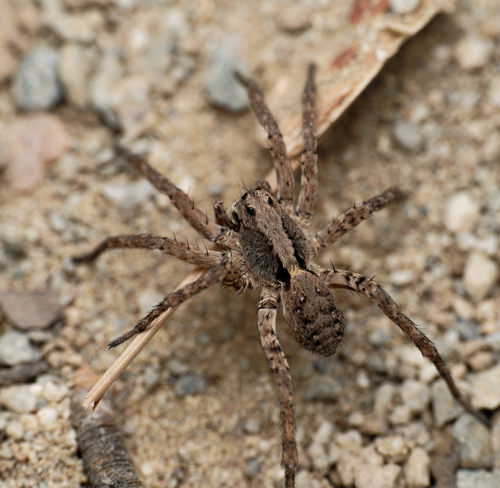
Alopecosa kochi is a medium-sized wolf spider with a body length of approximately 8–13 mm. Its body is typically dark brown to grayish, with a lighter median stripe on the cephalothorax and a pale abdominal pattern bordered by darker bands. It has robust, slightly hairy legs that support fast movement across the ground. This species displays clear sexual dimorphism, meaning males and females differ in size and physical characteristics. Males are generally smaller, are usually darker overall, have narrower abdomens, more defined leg banding, and distinctive palpal reproductive organs. The carapace is slightly elevated, creating extra space for jaw muscles that are essential for predation. Alopecosa kochi has eight eyes that provide excellent vision for hunting and navigation, and its compact body allows it to run quickly while chasing prey across open ground. Unlike many spider species, A. kochi does not spin capture webs; it uses silk primarily to create egg sacs and retreats. One study of 17 documented sightings found the spider in or on a web in only around 6% of cases, confirming it most often hunts without relying on webs. This species inhabits open, dry habitats including grasslands, forest edges, and sandy soils. Most observations of A. kochi occur outdoors, though it may occasionally be found indoors when seeking shelter during colder months. Alopecosa kochi is a cursorial hunter, meaning it actively searches for prey instead of waiting for prey in a web, and it hunts small ground-dwelling invertebrates. Females carry their egg sacs attached to their spinnerets; after the eggs hatch, spiderlings ride on the female’s back for several days. The species is found in temperate climates and is active during the daytime. Males travel widely to locate mates, particularly in warmer months. Males usually die shortly after mating, while females may survive through the rest of the breeding season. The timing of reproduction varies by season, and breeding periods can last longer in warmer regions. These spiders are generally calm and solitary, but they will defend themselves if they feel threatened. Their overall population remains fairly stable. Alopecosa kochi has a wide distribution across North America, ranging from southern Canada through most of the United States and into northern Mexico. The species is listed in multiple regional and global taxonomic databases, including the World Spider Catalog and the Integrated Taxonomic Information System (ITIS), which confirms its presence in these regions.