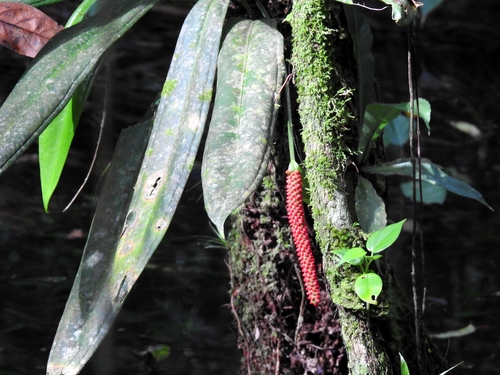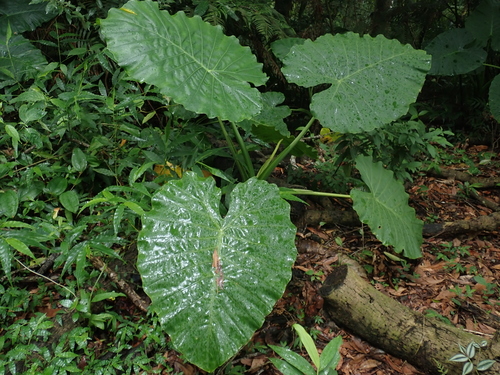
About Alocasia odora (G.Lodd.) Spach
Size
Alocasia odora is a species of Alocasia that grows to 0.5–1.6 meters (just over 5 feet) high.
Corm Dimensions
Its corms are 4 cm to roughly 10 cm in diameter and 3–5 cm wide.
Leaf Morphology
It has large leaves that are shaped like diamond blades, with a slight teardrop form, and are broadly ovate, light green, with a heart-shaped (cordate) base.
Petiole Characteristics
Its petioles are 0.3–1.0 m long, with lower portions clasping the stem.
Culinary Uses of Green Parts
In Southeast Asian cuisines, the leaves and stems of Alocasia odora are used as a green vegetable, most often to add flavor to soups or stir-fried dishes.
Raw Consumption Safety
No raw green plant material from this species is safe for consumption.
Commercial Preparation Forms
It is commonly sold peeled and boiled at Asian and specialty markets, prepared frozen, bagged in its own liquid, or canned.
Ingestion Risks of Raw Plant
Raw Alocasia odora is entirely inedible, and consumption can cause mild to severe gastrointestinal discomfort.
Toxicity Mechanism
This effect comes from microscopic needle-shaped calcium oxalate crystals called raphides that cover the plant's leaves.
Undercooked Leaf Symptoms
Eating undercooked leaves of this aroid produces a range of uncomfortable symptoms, from an itchy, sharp sensation in the esophagus often described as like swallowing broken glass or sand, which usually lasts no more than a few hours, to abdominal pain, hot and cold flashes, nausea, and vomiting.
Corm Culinary Use
Like the more widely cultivated edible taro Colocasia esculenta, the corm (root bulb) of Alocasia odora is sometimes boiled and mashed similarly to potatoes.
Corm Raw Safety
Just like the green parts of the plant, the corm cannot be eaten raw or undercooked.
Japanese Food Poisoning Cases
In Japan, multiple cases of food poisoning have occurred from accidental consumption of Alocasia odora.
Japanese Regulatory Warning
Japan's Ministry of Health, Labour and Welfare has issued warnings against eating this plant, which closely resembles the edible species Leucocasia gigantea and Colocasia esculenta.
Leaf Nutrient Content
Like many leafy green vegetables, Alocasia odora leaves are rich in vitamins and minerals even when they are toxic if improperly prepared.
Leaf Nutrient Composition
They contain thiamin, riboflavin, iron, phosphorus, and zinc, and are a very good source of vitamin B6, vitamin C, niacin, potassium, copper, and manganese.
Corm Nutrient Content
Alocasia odora corms are high in starch, though less starchy than potatoes, and are a good source of dietary fiber.
Corm Oxalic Acid Content
Trace amounts of oxalic acid may still be present in the corm, similar to the plant's stems and leaves.