About Aloa lactinea (Cramer, 1777)
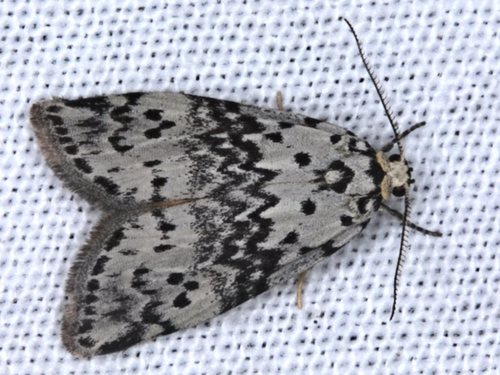
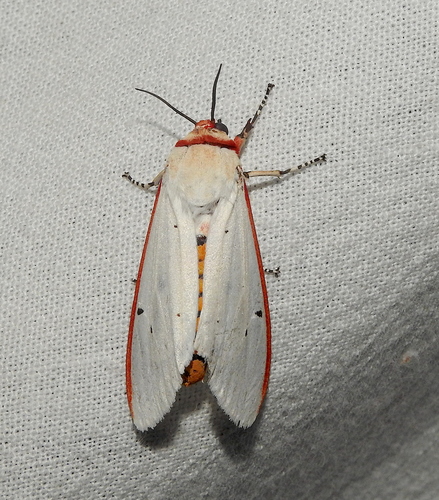
Aloa lactinea (Cramer, 1777) has a wingspan of approximately 40 mm. Its abdomen is yellow, and its antennae are black with a scarlet basal joint. The palpi are scarlet along the sides, white on the underside, and have a black terminal joint. The head is white, with a broader crimson line running behind it. The thorax is white. All wings are primarily white. The forewings have a scarlet fascia along the costa, and all red markings on this moth carry a deep crimson tone. A black speck is present at each angle of the forewing cell, though these black specks are absent in some individuals. The hindwings have a black spot at the end of the cell, plus a sub-marginal series of four black spots; the two spots closest to the anal angle are sometimes absent. The larva is black, with lateral tufts of reddish-brown hair. It has a sub-dorsal series of scarlet spots, as well as dorsal, sub-dorsal, and lateral series of black spots. Sub-lateral black spots occur on the 1st, 3rd, 4th, and 5th somites, and only two spots appear on the 11th somite. This species occurs in both primary and secondary habitats, ranging from lowlands to montane regions. It is classified as a minor pest. Its caterpillar feeds on castor, coffee, jute, groundnut, teak, ragi, sunflower, maize, finger millet, sweet potato, and beans.