About Alnus rhombifolia Nutt.
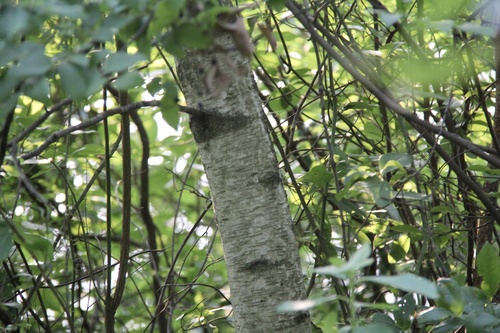
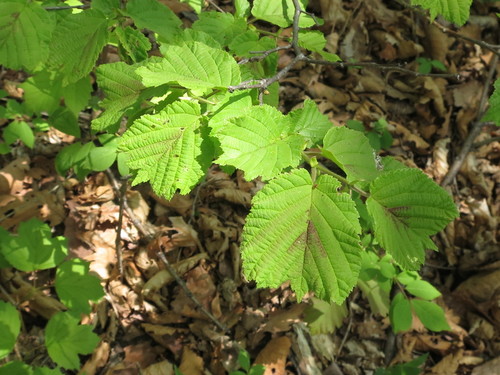
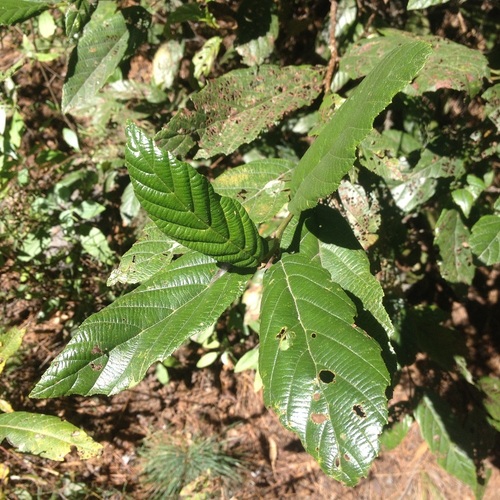
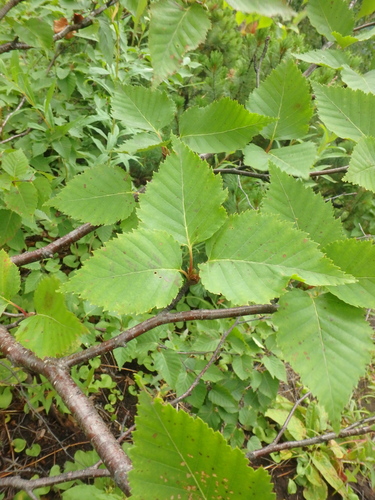
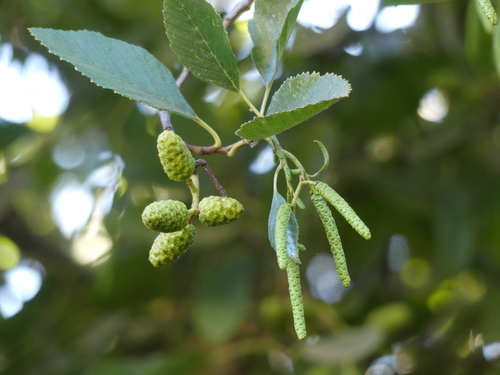
Alnus rhombifolia Nutt., commonly called white alder, is a medium-sized deciduous tree. It typically reaches 15 to 25 meters (49 to 82 feet) tall, though it can rarely grow up to 35 meters (115 feet) tall. Its bark is pale gray: it is smooth on young trees and becomes scaly on older trees. Its leaves grow in an alternate arrangement, and are shaped rhombic to narrow elliptic. They measure 4 to 10 centimeters (1.6 to 3.9 inches) long and 2 to 5 centimeters (0.79 to 1.97 inches) wide, with finely serrated margins and a rounded to sharply pointed apex, and are thinly hairy on their lower surface. This species produces flowers in catkins. Male catkins are pendulous, slender, yellowish, 3 to 10 centimeters (1.2 to 3.9 inches) long, and grow in clusters of 2 to 7. Pollination occurs in early spring, before new leaves emerge. Female catkins are ovoid; when they mature in autumn, they measure 10 to 22 millimeters (0.39 to 0.87 inches) long and 7 to 10 millimeters (0.28 to 0.39 inches) wide, borne on a 1 to 10 millimeter (0.039 to 0.394 inch) stem. They superficially resemble small conifer cones. The small, winged seeds disperse over the winter, and the old woody blackish cone-like structures can remain attached to the tree for up to a year after dispersal. White alder is closely related to red alder (Alnus rubra), and differs from it by having flat leaf margins rather than curled under margins. Like other alder species, it can fix nitrogen and tolerates infertile soils. Some Plateau Indian tribes use white alder to treat female health conditions.