About Allophylus decipiens (E.Mey.) Radlk.
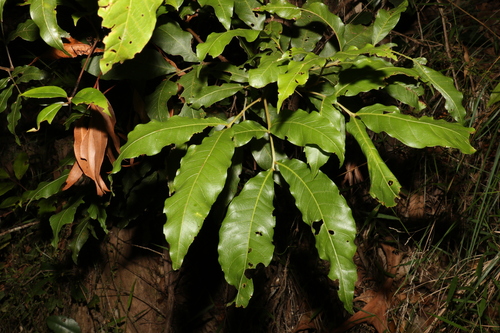
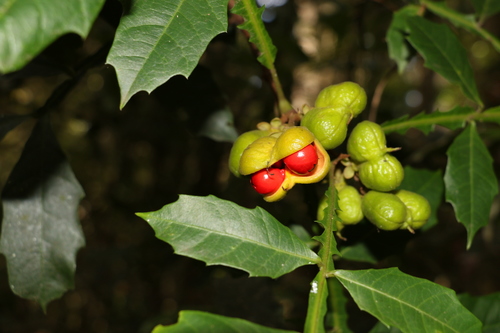
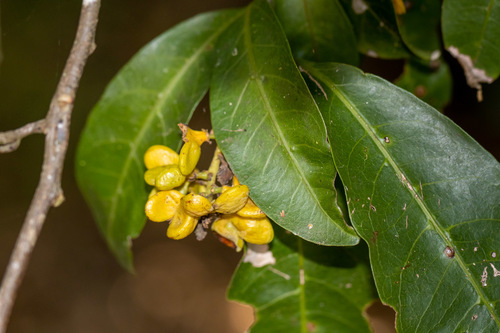
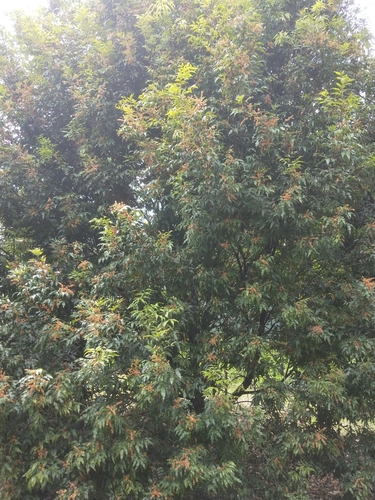
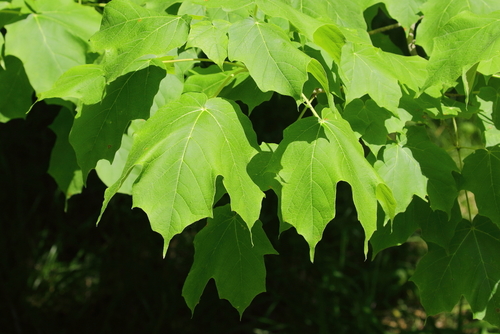
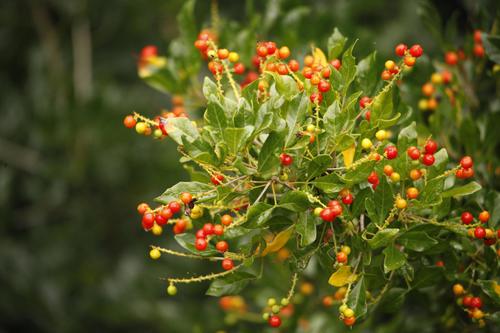
Allophylus decipiens (E.Mey.) Radlk., commonly known as the bastard taaibos, is a small evergreen tree that can be single-stemmed or multi-stemmed, reaching about 3–4 m in height. It grows in coastal forest, fringe forest, thickets, wooded ravines, and along streams. It occurs up to 800 m in elevation in the southern coastal regions of the Cape Province, KwaZulu-Natal, Eswatini, along the escarpment forest of Mpumalanga including the Soutpansberg, and in Mozambique. The genus Allophylus contains around 219 species. This species has pale grey bark, and glabrous trifoliolate leaves that may be deeply to shallowly lobed. Its small, fragrant whitish flowers grow in clusters of three, arranged in dense axillary racemes up to 6 cm long, or in 2-3 branched panicles. Fertile flowers are few in a panicle, with the rest of the flowers being male. Sepals are greenish-white and glabrous; petals are the same length as the sepals and fringed. Stamens are longer than petals, with filaments that are hairy at the base. The fruit forms 2 cocci, or 1 coccus if abortion occurs. Fruits are near-spherical, around 6 mm in diameter, and mature to bright red. Its wood is white, close-grained, and hard. Branchlets and petioles are minutely downy. Leaflets are sessile, ranging from oblongo-lanceolate to obovate, narrowed at the base, toothed near the apex, with revolute margins, glabrous, paler on the lower surface, and bearded in the axils of the veins. Peduncles are undivided, and equal the leaves in length. Flowers are arranged in spicato-racemose inflorescences. There are 1 to 2 carpels, which are rather large, obovate when dry, and reddish. This is a smaller shrub than the preceding species discussed, with small leaves and short, undivided racemes. Mature branches are ash-coloured, while branchlets are whitish. The common petiole is 1 inch long. The middle leaflet is 1 1/2–2 inches long and 7–10 lines wide; lateral leaflets are smaller. All leaflets are coriaceous, shining on the upper surface, cuneate and completely entire in the lower half, with a few larger or smaller teeth from the middle to the apex, obtuse or obtusely acuminate, and mucronulate. Spikes including the peduncle are 1–2 inches long. Flowers are small, greenish or brownish, and shining; their other parts match those of S. melanocarpa. Ovaries are divaricate; the style is bifid. Carpels are twice as large as in the other species, 2 1/2–3 lines long and 2 lines wide. Rhus undulata Jacq. (shown in Schoenb. t. 346) is very similar to this species, but differs in having paniculate, dioecious, pentandrous flowers.