About Allophylus cobbe (L.) Forsyth fil.
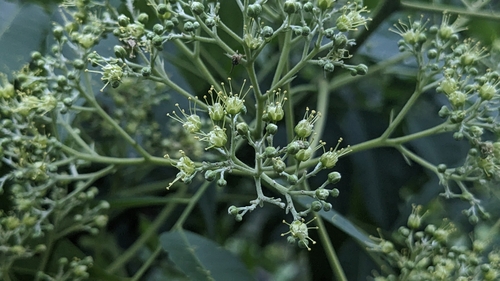
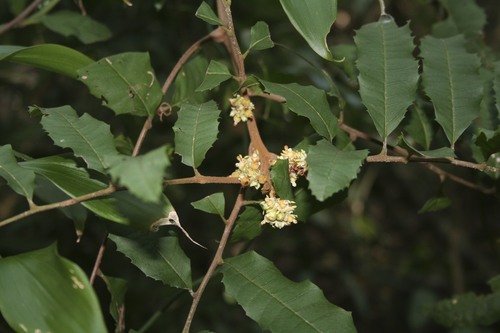
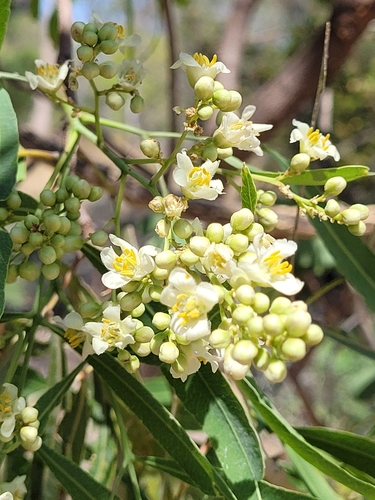
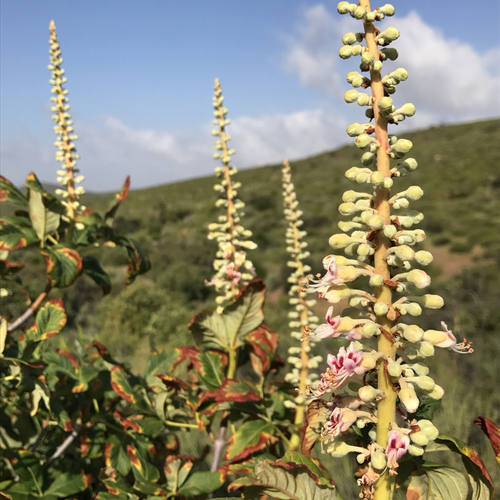
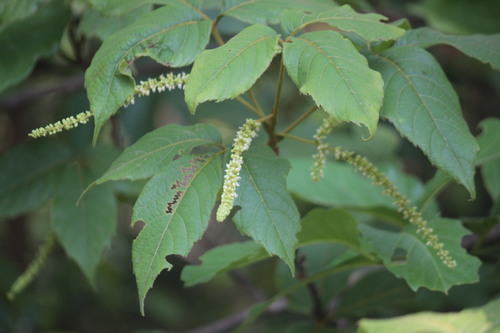
Allophylus cobbe (L.) Forsyth fil. shows wide variation in size across different regions. In Australia, it is recorded as a small to large shrub and never grows as a tree. In India, it is described as growing from a shrub to a small tree, while in Papua New Guinea, it is documented as a tree reaching up to 25 m high. Its leaves are compound, usually trifoliolate, but may have between one and five leaflets. The petiole can range from 2 to 11 cm (0.8 to 4.3 in) long, and the leaflet petiolules grow up to 1 cm (0.39 in) long. Leaflet blades are acuminate, obovate or elliptic, with pointed tips and cuneate bases. Leaf margins are often crenate towards the distal end, and leaf surfaces range from glabrous to tomentose. Many small actinomorphic flowers, reaching up to 2 mm (0.1 in) in diameter, grow on a 2–16 cm (0.8–6.3 in) long racemose inflorescence, which may be either branched or unbranched. It produces glabrous red drupe fruits that measure 4 to 16 mm (0.2 to 0.6 in) in diameter, each containing a single large seed. Allophylus cobbe has a pantropical distribution, found in tropical and some subtropical areas of Africa, Asia, Oceania and the Americas. It grows in monsoon forest, littoral forest, and on the margins of mangrove forest, most often on sandy soils. In Australia, it has been recorded at elevations from sea level up to around 500 m (1,600 ft). This species, commonly called titberry, has many uses in Ayurveda and other traditional medicine practices. It has been used as a mouthwash, and to treat ulcers, wounds, bone fractures, rashes, bruises, diarrhoea, fever and stomach ache. Its timber has been used for roofing, firewood, and to make bows, rafts and fish traps. Its fruits are edible, and can also be used as fish poison. Allophylus cobbe is a host plant for the moths Cleora injectaria and Gonodontis clelia, and for the butterfly Nacaduba pavana singapura.