About Allium validum S.Watson
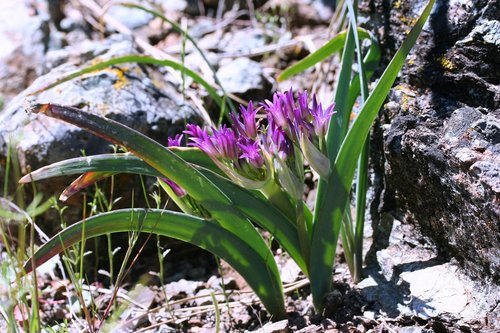
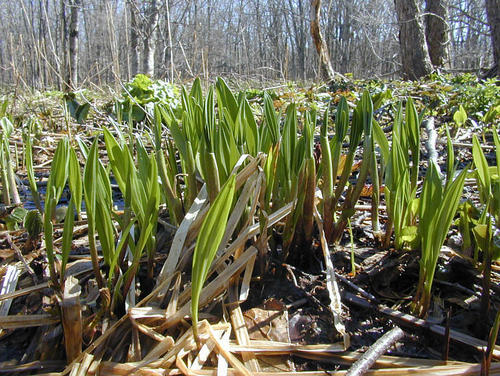
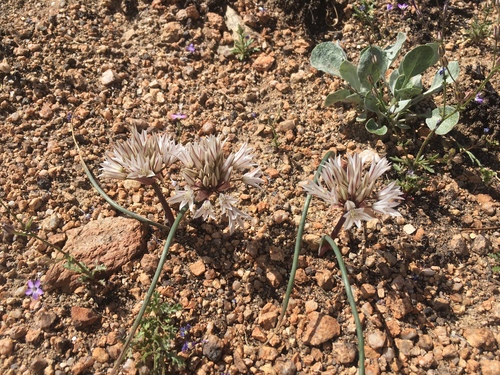
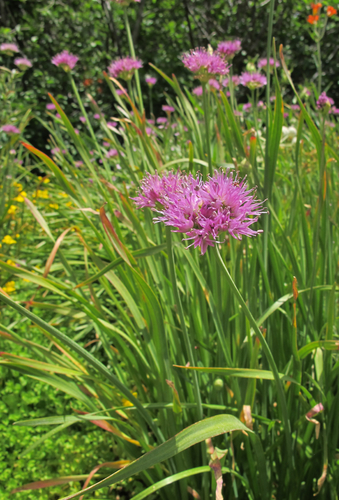
Taxonomy and morphology: The bulbs of Allium validum are 3 to 5 centimeters long, ovoid, and clustered at the short end of the plant’s stout rhizome. The outer coat of this rhizome is brown or gray, fibrous, and marked with vertical lines. The stem of A. validum grows 50 to 100 centimeters long and has angled edges. The plant produces 3 to 6 leaves that are roughly the same length as the stem; these leaves are flat or somewhat keeled. Each plant bears 15 to 40 flowers, each attached to a pedicel 7 to 12 millimeters long. The flower itself measures 6 to 10 millimeters across. Its perianth parts are roughly erect, narrowly lanceolate, and acuminate, and range in color from rose to white. The stamens are longer than the tepals, and the ovary lacks a crest. Ecology: Allium validum is a common plant in California, where it most often grows in wet meadows at elevations between 1,200 and 3,400 meters (3,900 and 11,200 feet). A. validum prefers sandy and loamy, well-drained soils. It can grow in acidic, neutral basic, or alkaline soils, but only grows in locations that receive abundant moisture and full sun.