About Allium oleraceum L.
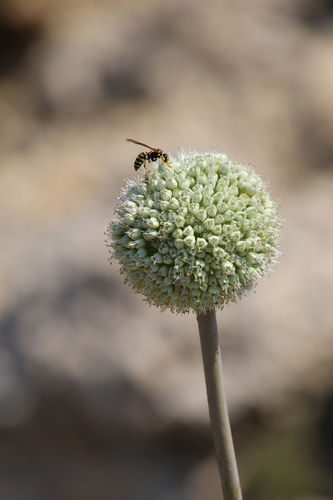
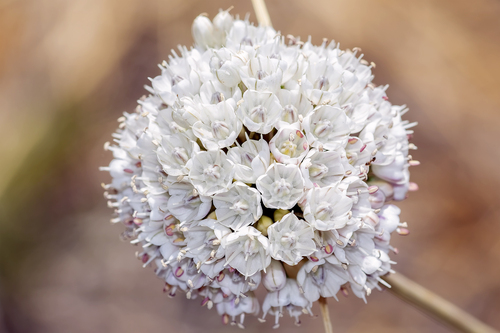
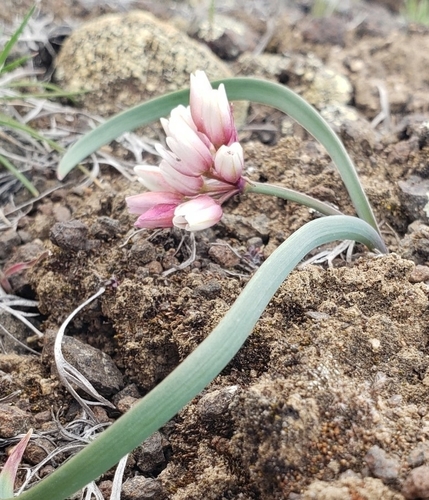
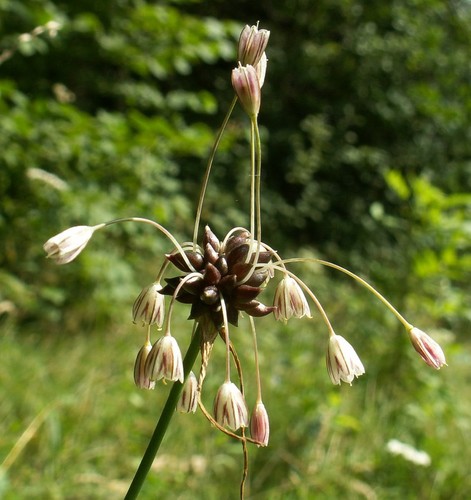
Allium oleraceum L. grows to a height of approximately 12 inches (30 cm). Its underground bulb reaches up to 0.8 inches (2 cm) in diameter. The main stem is usually rounded, though it is occasionally flattened, and it bears two to four leaves plus a terminal inflorescence. This inflorescence is made up of several small, stalked, pinkish-brown flowers, and sometimes also contains a few bulblets. The species' papery bracts have long points that often extend well beyond the flowers, and the flowers' stamens do not protrude. Allium oleraceum is widespread across most of Europe, with additional established populations found in Turkey and the Caucasus. It is only sparingly naturalised in scattered locations across North America. In the United Kingdom, A. oleraceum grows in dry, grassy areas that are usually steeply sloping with calcareous soils, as well as on open sunny banks in river floodplains. It is scattered throughout England, and occurs very sparsely in Wales, Scotland, and Ireland. Coastal erosion reduces the amount of suitable habitat for this species, which has caused population declines. The highest altitude recorded for this species in Britain is 365 m (1,200 ft) in Dovedale, Derbyshire. The former taxon Allium oleraceum subsp. girerdii is no longer included in this species, and is now classified as Allium oporinanthum.