About Aleurites moluccanus (L.) Willd.
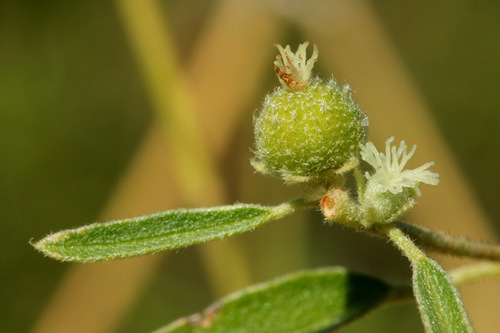
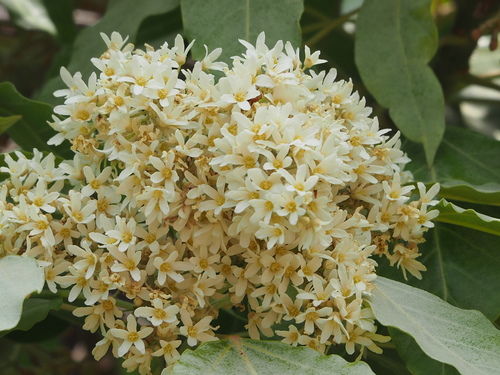
The scientific name of this species is Aleurites moluccanus (L.) Willd., commonly known as the candlenut tree. It can grow up to 30 meters (98 feet) tall, with wide, spreading or pendulous branches. Leaves are pale green, simple, and either ovate or heart-shaped on mature shoots, while leaves on saplings may be three-, five-, or seven-lobed. Mature leaves reach up to 20 centimeters (8 inches) long and 13 centimeters (5 inches) wide; young leaves are densely covered in rusty or cream stellate hairs. Petioles grow up to 12.5 centimeters (5 inches) long, and stipules reach about 5 millimeters (1/4 inch). Its flowers are small: male flowers are around 5 millimeters in diameter, and female flowers are around 9 millimeters in diameter.
The fruit is a drupe, measuring 4–6 centimeters (1+1⁄2–2+1⁄4 inches) in diameter, with one or two lobes. Each lobe holds a single soft, white, oily kernel inside a hard shell around 2 centimeters (3/4 inch) in diameter. When the nuts germinate, they produce cotyledons (seed leaves) that grow up to 9 centimeters (3.5 inches) long by 5.5 centimeters (2.2 inches) wide.
It is impossible to precisely establish the species' native range due to early spread by humans. Today, the candlenut tree is distributed across the New and Old World tropics, including the Indian subcontinent, Southeast Asia, Papuasia, Queensland, and some islands of the western Pacific Ocean. It was first domesticated on the islands of Southeast Asia. Remains of harvested candlenuts have been found at archaeological sites in Timor and Morotai (eastern Indonesia), dated to around 13,000 BP and 11,000 BP respectively. Archaeological evidence of candlenut cultivation is also found in Neolithic Toalean culture sites in southern Sulawesi, dated to around 3,700 to 2,300 BP. Early Austronesian voyagers widely introduced candlenuts to Pacific islands, where the species became naturalized on high volcanic islands.
Aleurites moluccanus grows in tropical rainforests and gallery forests. It is a very fast-growing tree and often appears in disturbed rainforest. In Australia, it grows at altitudes ranging from sea level to 800 meters (2,600 feet).
In Australia, rodents, particularly the giant white-tailed rat, eat the tree's seeds, and broken fruit shells are often found underneath candlenut trees. The larvae of the coleopteran Agrianome fairmairei feed on dead candlenut wood, and these larvae are considered a delicacy in New Caledonia.
Raw candlenut seeds are mildly toxic because they contain saponin, phorbol, and toxalbumins, and consumption of raw seeds produces a laxative effect. Heat treatment reduces the toxicity of the protein component. The kernel-derived candlenut oil has no known toxicity and is not an irritant, even to the eyes.
A wide range of human uses are documented for this tree. In ancient Hawai'i, candlenut (called kukui) fruits were burned to produce light: nuts were strung in a row along a palm leaf midrib, lit at one end, and burned one after another roughly every fifteen minutes, which led to their use as a measure of time. Hawaiians also extracted oil from the nut and burned it in a stone oil lamp called a kukui hele po (meaning 'light, darkness goes') with a wick made from kapa cloth. Hawaiians had many other uses for the tree: they made leis from the shells, leaves, and flowers; created ink for tattoos from charred nuts; made varnish from the oil; fishermen chewed the nuts and spat them on water to break surface tension, remove reflections, and gain greater underwater visibility. A red-brown dye made from the inner bark was used to color kapa cloth and aho (Touchardia latifolia cordage), and a coating of kukui oil helped preserve ʻupena (fishing nets). The nohona waʻa (seats) and pale (gunwales) of waʻa (outrigger canoes) were made from the tree's wood, and the trunk was sometimes used to make smaller fishing canoes.
Today, candlenut oil is commonly found in Indonesian hair care products. In Fiji, where the nut is called sikeci, its oil is used in cosmetic products. Wealthier members of the Batak people make their coffins (called pelangkah in the Karo language) from candlenut wood, carving the coffins into boat shapes with the bow decorated with the carved head of a hornbill, horse, or mythical beast called a singa. In the Philippines, the fruit and tree are traditionally known as lumbang, and the lakeshore town of Lumban in Laguna province is named for it. Before non-native species were introduced, it was frequently used to mark property lines, because its silvery underleaf makes the tree easy to spot from a distance. In Sabah, Malaysian Borneo, Dusun tribes call the fruit godou and use it as an optional ingredient in ink for tattoo-making. As recently as 1993 on the outlying islands of the kingdom of Tonga, candlenuts were chewed into a sweet-scented emollient used during a traditional funerary ritual, and used to make various sweet-smelling skin oils. Aboriginal Australian peoples have used the tree for a variety of similar purposes. In Flores near Ende, the tree is called kéloré, and it is used as a mordant for dyes made with Morinda citrifolia (mengkudu). On Rapa Iti in the Austral Islands, fish hooks were carved from the candlenut endocarp when other suitable materials were unavailable; these small hooks were used to catch specific fish species, including Leptoscarus vaigiensis (Komokomo) and Stegastes fasciolatus (Nganga).